




The Central Hub for DSM Community and Information

For 1990-1999 Mitsubishi Eclipse, Eagle Talon, Plymouth Laser, and Galant VR-4 Owners. This is where the DSM platform history is documented and archived. Log in to help us in our mission, and to remove most ads from the browsing experience.

20231029_160050.jpg

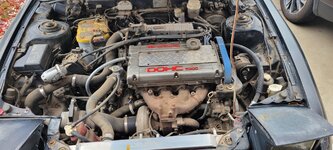
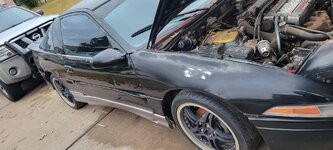
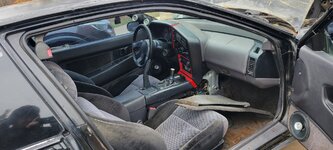
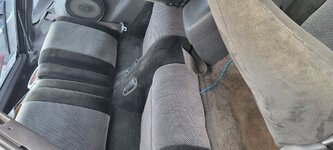
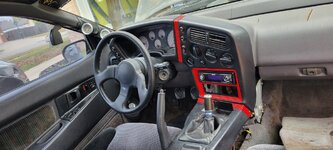
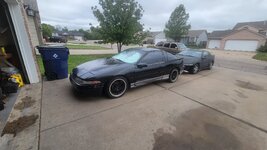
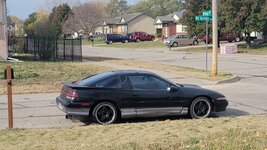
My old highschool car

I regret getting rid of this car but have it back again!!!

This site may earn a commission from merchant affiliate links, including eBay, Amazon, and others.

The cheapest multimeter I know of that is actually good is the INNOVA 3320.
I have one in the garage that I use a lot and it's been reliable and accurate for years.

It's good to have a Haynes manual. I just used it to check on the 4.7 volts thing. Found it right away by finding Coolant temperature sensor in the Index, going to the page, and there it was. It says there approximately 4.5 to 4.9 volts. You can still buy them new. It would be the Haynes #68030. You can order them from O'Reilly or from Haynes directly. Either way it would cost about $40 after shipping is added. I think from O'Reilly it's a buck or 2 cheaper. I can give you links to those if you want. Almost everybody else selling them is selling used ones.
 
I actually managed to find a brand new one once I got the eclipse I grabbed one LOL. I haven't been able to check but will chick by not using the plug. I won't have a meter & can't get one ATM. Hope everyone is having a great weekend! Hopefully it's the plug itself. If not I will be buying a meter next payday LOL
 
I actually managed to find a brand new one once I got the eclipse I grabbed one LOL. I haven't been able to check but will chick by not using the plug. I won't have a meter & can't get one ATM. Hope everyone is having a great weekend! Hopefully it's the plug itself. If not I will be buying a meter next payday LOL
You can find the wiring diagram manuals on ECMTuning's website https://www.ecmtuning.com/wiki/ecuwiringinformation. The Haynes manual is good for maintenance and surprisingly for doing engine swaps, but the factory service manual found under the Resources tab has way more information than the Haynes.
Finally got the hatch open with help from the wife!!!! Spring is definitely weak. I sprayed pb blaster & wd40 to let it clean and lubricate. Shut it and still won't pop on its own. but atleast it can open LOL.

View attachment 740302

View attachment 740303
You have two sports car under construction??
 
Haha. yes. I got the eclipse as a daily driver and then we saw the guy selling my old car which is the talon. I was able to scrounge up money with the wife helping me to get the talon once I had something to drive. I would like to get a 2000 -2005 chevy blazer and get rid of the eclipse. But I can't and it worked out great with both the eclipse and talon being a 1990 with that being a weird year for these cars. I got 2 LOL.

The tranny in the eclipse is fine. The talon has 2nd gear gone or at least pops out of gear. Maybe it's from the bearing on the driver side input/cv shaft being gone. Maybe once thag gets replaced 2nd gear will be fine LOL. I am needing to get the brake master replaced & thag bearing. I have both parts but never done either and hoping I am able to get help with it which I may attempt to do next weekend. Even if I can't complete it, won't be a big deal as thr car can't be driven with no brakes LOL 🤣😂
 
Haha. yes. I got the eclipse as a daily driver and then we saw the guy selling my old car which is the talon. I was able to scrounge up money with the wife helping me to get the talon once I had something to drive. I would like to get a 2000 -2005 chevy blazer and get rid of the eclipse. But I can't and it worked out great with both the eclipse and talon being a 1990 with that being a weird year for these cars. I got 2 LOL.

The tranny in the eclipse is fine. The talon has 2nd gear gone or at least pops out of gear. Maybe it's from the bearing on the driver side input/cv shaft being gone. Maybe once thag gets replaced 2nd gear will be fine LOL. I am needing to get the brake master replaced & thag bearing. I have both parts but never done either and hoping I am able to get help with it which I may attempt to do next weekend. Even if I can't complete it, won't be a big deal as thr car can't be driven with no brakes LOL 🤣😂
If you decide to remove the transmission, I highly recommend removing the hood, using a cherry picker, and having an assistant raise and lower the cherry picker hoist while you have your arm under the bell housing and hand under the gear cluster section.
 
@awdtsi_90
Want to give you some info about the air filter I sent you with the MAF, since it's a nice one and they may or may not ever be available again new! K&N doesn't show it anymore in the lookup on their web site. Summit Racing just says "Not Available".
Anyway it's a K&N E-2875.
It was made for use in the stock airbox but you don't need the airbox to use it, because it will clamp to the MAF directly, without the airbox (which is how I used it).

The best info I could find for it is STM - they have a web page for it, with their usual good pics and useful information:
K&N E-2875 at STM

Since this web page could be gone at any time, here's a screen shot of it with all the useful info:

K&N E-2875 air filter for 1g DSM - shot of STM page for it in 2024 w backorder note - filter I...jpg


If you need their instructions about cleaning and oiling the filter, I can post a scan of that.
But with the filter where it is in the engine bay, you probably won't need to clean it for a long time.
The filters that usually get dirty pretty fast are the ones that are in a cold air intake.
 
Meter should read about 2,400 ohms at 68 deg F haha good luck finding that there right now!
At 100 degrees F I think the resistance is about 1,700 ohms but there is a typo right there in my copy of the FSM! At 176 degrees F it should be about 300 ohms.
I got one more data point for you for testing the coolant temp sensor with an ohmmeter.
1,840 ohms at 77 degrees F.

So that's unofficial but it's probably better than the typo that the FSM has for 100 degrees.
I got it by testing my spare sensor that's in the picture in post #73.
That sensor is a Standard Motor Products brand replacement sensor for 1g DSM. (Rock Auto)
 
Awesome, thank you so much. I will get a K&N filter cleaning & oil. I had one when I originally had the talon in high school. Used to let it dry for so long just to be extra careful LOL. I still haven't had a chance to do anything yet being broke and tired by time I get off work.

I do think I will attempt the brake master cylinder this weekend because it needs done & I'm not driving the car anyways so if I can't get it done no harm no foul LOL.

All it needs tho to drive is the brake master cylinder replaced, bearing for driver CV/ input shaft replaced, then bleed the clutch and it's driveable. Also gotta get the coolant sensor issue figured out. It's not to far away!!!
 
Good news everyone. I cut off the plug and hard wired with connectors and bam. Now it reads the coolant temp correctly! Didnt start it because I was using jumper cables just to power ecu to see if it was reading the sensor now or not. Now only brake master cylinder, bearing replacement then bleed thr brake master cylinder & clutch master cylinder and it will drive!!!! I can't wait

20240902_193444.jpg


20240902_193420.jpg


here is a better view

20240902_193407.jpg
 
Yeah 89 degrees, sounds about right for Mulvane/Wichita lately!
To be more safe I would wrap some electrical tape or heat shrink or rubber tubing or something non-conductive around the one terminal that comes from the yellow wire with green stripe in the harness wiring. That one has a small voltage in it from the ecu when the key is on.
The other terminal could stay bare because it is a ground.

Do you have a metal snorkel pipe going from the MAF to the turbo inlet? It looks pretty good whatever it is. Where did you get that?
 
Can’t say I’m thrilled to see two butt crimp connections there but, hey…. I’m glad to see it working properly!
I had to repair mine today and crimped on a couple of red spade terminals. I'll get around to installing a new OEM connector for quality.
Your coolant temp sensor wiring looks like it'll break as soon as you touch it/look at it wrong.
 
It looks like a hack wiring job LOL but Those are not permanent as it is just to get the car running & working. Before I start driving it those will get heat shrink around them, which I will be looking to buying heat shrink as I think it's getting pretty close to being ready for it's first road drive LOL.

How would you guys do it? heat shrink, then electric tape then wrap a loom around it once heat shrink & wrapped with electric tape?

I want it to last and be done right. Those are just temporary to get the car running from sitting 10 years.

Do you have a metal snorkel pipe going from the MAF to the turbo inlet? It looks pretty good whatever it is. Where did you get that?
Yes, that is a metal pipe that was made from Ray at fusion works racing when he put the motor, turbo, clutch, suspension in before I sold it. Which glad I got it back now. Thank you again so much for the MAF & filter were on boost!!!!!!!!!

I had to repair mine today and crimped on a couple of red spade terminals. I'll get around to installing a new OEM connector for quality.
Your coolant temp sensor wiring looks like it'll break as soon as you touch it/look at it wrong.
The wiring your talking about is the lower coolant temp sensor that has the 2 butt connectors on it right?
 
Last edited:
Yes, that is a metal pipe that was made from Ray at fusion works racing when he put the motor, turbo, clutch, suspension in before I sold it. Which glad I got it back now. Thank you again so much for the MAF & filter were on boost!!!!!!!!!
That metal pipe looks very good to me. Looks like a nice upgrade from stock.
I love seeing my MAF and filter in there having a second life! They still look so good. Ever notice in people's pictures how usually their air filters look all mangled up? That one is still like new pretty much.

How would you guys do it? heat shrink, then electric tape then wrap a loom around it once heat shrink & wrapped with electric tape?
Well, I almost hate to get into it how I do it. Because there are different ways that can be ok, with plus and minus points for them.
But if you use heat shrink, which is a good way, you then don't need any electrical tape. In fact I hate the old fashioned electrical tape that is made out of PVC. So I never use that for anything anymore.
Heat shrink is good, you kind of need a hot-air gun to shrink it.
I've been getting away from solder. I usually use parallel connectors (crimp sleeves) rather than butt connectors. In a parallel connector, the stripped bare parts of the 2 wires lay next to each other (parallel). The crimp sleeve goes over them and smashes them together, and the heat shrink goes over the crimp sleeve.
That's for making generic connections between wires, like where you have your butt connectors.
For these generic crimps I use a Channelloc 909 which is an awesome tool and not over priced.

In the engine bay I've been using actual engine compartment wire which has 125 degrees C rated insulation and it seems very robust. I don't see any degradation in any of mine that has been in the engine bay for several years now. That type of wire is always called GXL or SXL depending on the thickness of the insulation. I don't buy it locally, and there are minimums usually. So it's not exactly a no-brainer to use it.
When you use that type of wire you don't actually need to cover it with any type of loom. I will "bundle" it if needed by wrapping a narrow band of silicone or teflon tape (see below) around it at intervals. But I want to see my wires so I can follow them visually wherever they go. I don't want them to be all covered up.

I run the heat shrink far enough beyond the crimp sleeve in both directions to act as a good strain relief for the wire. The strain relief is to reduce the problem of the wire getting bent over hard which after a while starts to crack the insulation and the wire.
If you are soldering stranded wire, the solder will wick up the wire farther than you might think, so you need pretty long heat shrink to go for sure beyond wherever the solder wicking stops, for strain relief, otherwise the solder in the wicking area will crack when the wire bends, and that eventually ruins the whole thing.
A problem with using crimp sleeves and heat shrink like this is you need some room on your wire to stack all this stuff up on the wire first before you crimp, unless one end of your wire doesn't have anything on it yet like a plug, which would get in the way of sliding the heat shrink over the wire.
If there isn't room for that, you might end up using a tape rather than heat shrink.
On my car, where you have butt connectors, I covered up my crimp sleeves with self-fusing silicone tape. It fuses well in the engine bay heat, so it's working good. It does wind up being a little "fat". The parallel connector type crimp sleeves also end up being a little "fat". So in some places that bulkiness won't be good.

When I need tape, I'll either use teflon tape that has silicone adhesive on one side, or I'll use self-fusing silicone tape that has no adhesive, it just sort of grows together. They are both expensive. The self-fusing silicone tape seems to have a shelf life, and it doesn't work very well if you don't stretch it as you pull it around the wire, or if it isn't warm enough (the weather). Having to pull on it to stretch it is sometimes a problem because it puts strain on your nice new wire. The teflon tape with silicone adhesive on one side is awesome and I'm using it more and more but haven't actually used it in the engine bay very much yet. It costs about $2 per foot! And I always have to order it. I buy the .003" thick stuff from C.S. Hyde, which most people have never heard of. 🙂

So those are some points to think about and probably your methods will evolve over time, depending on how your experience goes with these things!
 
Last edited:
@19Eclipse90 and @TuskeeTuner
You guys, do you think there is any disadvantage of 3:1 heat shrink vs 2:1 shrink ratio?
What about adhesive lined?
I can't figure out why 3:1 was so rare until just lately. Now it seems easier to find. But I think the heat shrink you'd find at most local auto parts stores would still be 2:1.
I've never had 3:1 but I just ordered some, and it's going to be adhesive lined too.
Using parallel connectors like I do, the shrink tube needs to be fairly big to fit over the crimp sleeve but fairly small to come down tight over the wire. So I always wish I had 3:1 and for some reason I've never had it.

I checked just now on NAPA and O'Reilly web pages and they don't even say what the shrink ratio is. Good grief.
The 3:1 I just ordered is from Amazon.
 
Last edited:
Without getting into the aerospace specification stuff that oozes out and seals against environmental elements, I just cut two different length pieces of heat shrink; one longer than the other, and apply the shrink so that the outer later overlaps the inner layer. https://www.extremepsi.com/store/Sheridan-Engineering is a good start if you're serious about constructing higher quality connectors. Autozone/Harbor Freight heat shrink is good enough if you follow best established practices. Don't overthink it.

@19Eclipse90 and @TuskeeTuner
You guys, do you think there is any disadvantage of 3:1 heat shrink vs 2:1 shrink ratio?
What about adhesive lined?
I can't figure out why 3:1 was so rare until just lately. Now it seems easier to find. But I think the heat shrink you'd find at most local auto parts stores would still be 2:1.
I've never had 3:1 but I just ordered some, and it's going to be adhesive lined too.
Using parallel connectors like I do, the shrink tube needs to be fairly big to fit over the crimp sleeve but fairly small to come down tight over the wire. So I always wish I had 3:1 and for some reason I've never had it.

I checked just now on NAPA and O'Reilly web pages and they don't even say what the shrink ratio is. Good grief.
The 3:1 I just ordered is from Amazon.
The 3:1 appears to be DWP-125...stuff we use in aerospace. I've used it and seen it used with "highly sophisticated" systems onboard jets...

@19Eclipse90 and @TuskeeTuner
You guys, do you think there is any disadvantage of 3:1 heat shrink vs 2:1 shrink ratio?
What about adhesive lined?
I can't figure out why 3:1 was so rare until just lately. Now it seems easier to find. But I think the heat shrink you'd find at most local auto parts stores would still be 2:1.
I've never had 3:1 but I just ordered some, and it's going to be adhesive lined too.
Using parallel connectors like I do, the shrink tube needs to be fairly big to fit over the crimp sleeve but fairly small to come down tight over the wire. So I always wish I had 3:1 and for some reason I've never had it.

I checked just now on NAPA and O'Reilly web pages and they don't even say what the shrink ratio is. Good grief.
The 3:1 I just ordered is from Amazon.
No disadvantage...other than cost.

It looks like a hack wiring job LOL but Those are not permanent as it is just to get the car running & working. Before I start driving it those will get heat shrink around them, which I will be looking to buying heat shrink as I think it's getting pretty close to being ready for it's first road drive LOL.

How would you guys do it? heat shrink, then electric tape then wrap a loom around it once heat shrink & wrapped with electric tape?

I want it to last and be done right. Those are just temporary to get the car running from sitting 10 years.


Yes, that is a metal pipe that was made from Ray at fusion works racing when he put the motor, turbo, clutch, suspension in before I sold it. Which glad I got it back now. Thank you again so much for the MAF & filter were on boost!!!!!!!!!


The wiring your talking about is the lower coolant temp sensor that has the 2 butt connectors on it right?
Yes...correct, sir. The two lower wires go to the ECU's coolant temp sensor. The upper sensor is for the EGR coolant temp sensor - don't care since I'm only planning to run a catalytic later on. Follow the Sheridan Engineering link to ExtremePSI's web site for OEM connectors and contacts.
 
The 3:1 appears to be DWP-125...stuff we use in aerospace.
The 3:1 stuff I ordered last night is this. It has clear markings on it but nothing like DWP-125, or Raychem or TE or any other brand I've ever heard of. It doesn't cost much. So I wonder if it will be ok. What do you think? I'll be fooling around with it just for test in a few days.

cut two different length pieces of heat shrink; one longer than the other, and apply the shrink so that the outer later overlaps the inner layer.
This is what I do too except I put the shorter piece on top. Either way it makes the whole thing stiff in the middle (good) and less stiff out near each end so any bending there gets spread out more - strain relief in other words.

Even with using the smallest diameter possible for the first one (inner layer) that fits over my crimp sleeve, it might still be too big to come down tight on the wire. With 3:1 my first (inner) layer would be less likely give me trouble with not coming down all the way to the wire. The outer layer is usually not a problem because it goes over something that is already bulked up, so I can use a bigger size shrink tube if I need to on that layer.
 
Don't overthink it.

For these connections, this is also my suggestion. New terminals, new connector(s), done.

I haven’t spent any significant amount of time looking at the different types of heat shrink. A couple quick references that I would tend to trust suggest that 3:1 is preferred for its wider range of use and its thicker sheath after heat, providing a little extra strain relief for the connection itself. Again, I’m nowhere near an expert on this topic.

Yes...correct, sir. The two lower wires go to the ECU's coolant temp sensor. The upper sensor is for the EGR coolant temp sensor - don't care since I'm only planning to run a catalytic later on.

The upper sensor is for the A/C. No EGR sensor exists on the thermostat housing. There is a thermovalve (vehicles with Federal spec emissions) but it is just that, a valve, not a sensor, so no wires.
 
He knows about Brad Sheridan from posts #19 and #20.
If Brad offered the 1g ECT connector with pigtails already assembled, the whole thing would be a lot easier. But I don't think he does.
When I did mine a couple years ago I had to buy the connector parts from Brad as a kit like this, from this page:
1GECT PN# CON-1GECT (1g engine coolant temp signal to the ecu)

Then you need to put that together with a proper crimper with whatever new wire you want to use, for which Brad recommends a Hozan P-706. Because you don't want to use a general purpose generic crimper to crimp these OEM type terminals. I bought mine from a seller in Japan. Hopefully that part is a little easier these days, I haven't looked.

For someone who has never done any of this before, it is not just a simple no-brainer thing.

After he does all that, he has a nice new connector to go on his ECT sensor, and it has pigtails.

Now he has to connect the pigtail ends to wherever his old harness wires are cut off at.
That would be where his butt connectors are now.

So for those butt connectors, instead of trying to do it like the many words I wrote above with parallel connectors and separate heat shrink, I will say that the easiest way for sure is with butt connectors. Good butt connectors.
You can get good quality butt connectors and I think it will be just fine if he uses good ones, like this one that I had to take off my car a few years ago. There is nothing wrong with it, I just had to do that wire a different way then they had it. English Racing put butt connectors like this on my car in several places and they seem ok and look good:

DSC01377  Raychem DR-25.JPG


Raychem 1/8 DR-25. These come in different diameters of course.
Metal butt connector inside with heat shrink covering it, adhesive inside as far as I know, to seal it up and to put more of a grip on the wire than what you'd have with just the crimp. You can see from my inch scale that it's not very long. And it's not fat. So compact, seems like good quality, and for sure it's very easy to assemble to your wires.
 
Last edited:
Even without a pigtail, this is a very easy process. I will agree that the right tool (for the job, crimper in this case) helps (seems we’ve both taken Brad’s advice on this). This is not the same style of terminal as the ECT connector but it gets the point across. This one is actually a terminal for the O2 sensor, worth mentioning since that connector has been discussed in this build journal. It is a spare wire and shown only for reference.

There is plenty of wire in that loom to cut off the old terminals, crimp on new terminals, and install a new connector without requiring a pigtail. May need to open up a bit more of the original loom to access it but the wire is there and, generally, in good condition a few inches back from the original connector.

New terminal with new wire, stripped:
IMG_1774.jpeg


Ensure new wire exposed length is good for the terminal:
IMG_1775.jpeg


Crimp terminal onto wire:
IMG_1776.jpeg


Check crimp connection. Give it a couple good tugs to ensure a good joint:
IMG_1777.jpeg


Crimp terminal to insulation to complete joint:
IMG_1778.jpeg


Enjoy new terminal on new wire, ready to be inserted into new connector:
IMG_1779.jpeg
 
You know what, I had the wrong idea about what DR-25 is. I thought it was a complete ready-to-go butt connector including the heat shrink. But apparently not. It is actually just heat shrink tube. So that connector I showed in post #96 is apparently just a metal connector with DR-25 heat shrink over it.
 
Last edited:
You know what, I had the wrong idea about what DR-25 is. I thought it was a complete ready-to-go butt connector including the heat shrink. But apparently not. It is actually just heat shrink tube. So that connector I showed in post #96 is apparently just a metal connector with DR-25 heat shrink over it.
It does look nicely done, in any case! :thumb:
 
Add Value - Be Respectful - No Trolling - No Misinformation - Participate Often!
Support Vendors who Support the DSM Community

Build Thread Updates

Latest Classifieds

Back
Top











