The Central Hub for DSM Community and Information

For 1990-1999 Mitsubishi Eclipse, Eagle Talon, Plymouth Laser, and Galant VR-4 Owners. This is where the DSM platform history is documented and archived. Log in to help us in our mission, and to remove most ads from the browsing experience.

img_1131.jpg

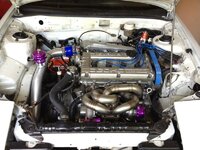
9 second 1g auto drag build

This site may earn a commission from merchant affiliate links, including eBay, Amazon, and others.

Finally had time to dig into my motor and found this. Going to throw a new set of bearings in for the shootout and then tear it down afterwards. Will need a new crank and bearings. Not sure if the converter (or old converter) ballooned or if it was caused by cavitation. Leaning towards a converter issue.

922080_10151729439036878_1685522672_o.jpg
 
OP, I'm surprised you'll comment on the converters being the cause when post #269 shows oil shaft and case wear? Why drag in two DSM converter vendors with negative speculation when the answer is clear?

Drag racing with a stock oil pan, doesn't sound like there's a lot of oil around the pump screen during a launch. This is old Drag Racing news and all the Domestics have a solution, I'd borrow their findings and move forward.;)
 
Sinister for the win?

^^ +1 :thumb:

my sinister converter is doing me great! No tune and and can leave at full boost at 4k+

Mike has done a great job with his latest converters, real loose on the low end and tight as hell on the top end. I only loose like 2-3mph over what a stock restall would be
 
OP, I'm surprised you'll comment on the converters being the cause when post #269 shows oil shaft and case wear? Why drag in two DSM converter vendors with negative speculation when the answer is clear?

Drag racing with a stock oil pan, doesn't sound like there's a lot of oil around the pump screen during a launch. This is old Drag Racing news and all the Domestics have a solution, I'd borrow their findings and move forward.;)

Oil pump failure causing a thrust bearing to fail without catastrophic failure of other items is very unlikely. I unfortunately have killed many oil pumps pushing the car and never once have I had a thrust bearing fail. However on the auto cars it is coming more and more common to see convertor ballooning cause thrust beaning failure.
 
OP, I'm surprised you'll comment on the converters being the cause when post #269 shows oil shaft and case wear? Why drag in two DSM converter vendors with negative speculation when the answer is clear?

Drag racing with a stock oil pan, doesn't sound like there's a lot of oil around the pump screen during a launch. This is old Drag Racing news and all the Domestics have a solution, I'd borrow their findings and move forward.;)

I said it was "possible" and after last night I know exactly what caused it. The 7 year old Hughes converter ballooned (not the Sinister, to be clear) causing the thrust bearing wear and ultimately oil pump failure...not the other way around as you're implying. So I guess the answer wasn't so clear, was it?

As for the oiling system, I plan on upgrading that, although it wasn't the issue here.

^^ +1 :thumb:

my sinister converter is doing me great! No tune and and can leave at full boost at 4k+

Mike has done a great job with his latest converters, real loose on the low end and tight as hell on the top end. I only loose like 2-3mph over what a stock restall would be

Glad you got a good one. ...he was being sarcastic though. ;)

Oil pump failure causing a thrust bearing to fail without catastrophic failure of other items is very unlikely. I unfortunately have killed many oil pumps pushing the car and never once have I had a thrust bearing fail. However on the auto cars it is coming more and more common to see convertor ballooning cause thrust beaning failure.

It's unfortunate but very true. I think a big part of it is the minimal amount of converter free play. I think shimming the trans could be a good fix...perhaps stacking 2 starter plates would be a good start gaining an extra 1/16".
 
Typicall happens when you spray. The converter expands and puts pressure on the crank. Theres about an 1/8" free play on the converter so after it expands more than that it puts a tons of pressure on the crank causing premature thrust bearing failure.
 
Typicall happens when you spray. The converter expands and puts pressure on the crank. Theres about an 1/8" free play on the converter so after it expands more than that it puts a tons of pressure on the crank causing premature thrust bearing failure.

Makes complete sense, thanks for the explanation :thumb:

how much are you spraying? And is it only at the line, down the track or both?

could the converter ballon from too big of turbo and too much boost as well?
 
How does a ballooning converter cause an oil pump and casing to look like that then?

Posts in here are also implying that the stock converters front cover will balloon with how much torque at the launch, 350lbs? If this is the diagnosis someone please contact these vendors and tell them to halt production of the 1G converter ......

Bradco, Bushur, Hughes, IPT, Level Ten, Sinister Speed and local Joe restall shop.

Why ?
They all use the stock front cover of the torque converter or literally use the stock converter. To say the stock converters front cover is ballooning on such a low amount of torque is not possible, sorry. Before everyone goes throwing every 1G DSM torque converter company under the bus, make sure the driver knows the right story to tell the families of the dead.

And DSMers wonder why we pay a lot for parts or why companys don't want to make converter/trans parts. :hmm:

There is literally a photo of a dead oil pump and casing and we have posts justifying a torque converter ballooning with maybe 350lbs of torque.:nono:
At this point we might as well throw PTE in the mix for making a turbo that produces too much power and attributed to causing the oil pump to cavitate on the launch. How's that sound, ya, pretty irresponsible.

What about all those 8 and 9 second 1G DSM autos with the companys above converters that aren't ballooning, if the front cover is so soft shouldn't it balloon regardless?

Post #269 says it all. From here I'd say lets hope the OP stops his string of bad luck and gets it all back together as solid, stable and as cheap as possible and moves on.
 
He just stated 2 posts up that when the converter balloons it puts alot of pressure on the thrust bearing and crank which would make the oil pump gears and case to get worn like they did.

he has been using a stock hughes restall on 700+ horsepower, what do you expect from a stock restalled converter at that power level without balloon plating.

and if you look better at all the companies you just listed, they all offer balloon plating/N.T.C (nitrous'd torque converter) to keep the converter from ballooning/expanding
 
How does a ballooning converter cause an oil pump and casing to look like that then?

Posts in here are also implying that the stock converters front cover will balloon with how much torque at the launch, 350lbs? If this is the diagnosis someone please contact these vendors and tell them to halt production of the 1G converter ......

Bradco, Bushur, Hughes, IPT, Level Ten, Sinister Speed and local Joe restall shop.

Why ?
They all use the stock front cover of the torque converter or literally use the stock converter. To say the stock converters front cover is ballooning on such a low amount of torque is not possible, sorry. Before everyone goes throwing every 1G DSM torque converter company under the bus, make sure the driver knows the right story to tell the families of the dead.

And DSMers wonder why we pay a lot for parts or why companys don't want to make converter/trans parts. :hmm:

There is literally a photo of a dead oil pump and casing and we have posts justifying a torque converter ballooning with maybe 350lbs of torque.:nono:
At this point we might as well throw PTE in the mix for making a turbo that produces too much power and attributed to causing the oil pump to cavitate on the launch. How's that sound, ya, pretty irresponsible.

What about all those 8 and 9 second 1G DSM autos with the companys above converters that aren't ballooning, if the front cover is so soft shouldn't it balloon regardless?

Post #269 says it all. From here I'd say lets hope the OP stops his string of bad luck and gets it all back together as solid, stable and as cheap as possible and moves on.

Ever think that the pump got damaged AFTER the thrust bearing took a shit? You act like a ballooning converter has never caused thrust bearing damage, so you're either blind to that or just don't care to research. No, it doesn't happen all the time. It didn't happen on the old converter. It happened to Jesse Abele as well as other fast cars.

Case and point for this scenario. I couldn't get the new thrust bearing in because the crank was over too far to the timing side STILL. I literally had to loosen the trans and pull it out an 1/8" to allow the crank to mover over far enough. That is PROOF that the converter is ballooned. I guess that measly torque CAN balloon the converter....there goes your theory.

On a side note, your rants and arguments sound an awful like Mike's from Sinister and reading through your previous posts all you chime in about is converters, efficiency, etc.....so IF that's the case, it explains why you feel the need to rant in my thread....also, no need for your input back in here. If not, sorry for the confusion.
 
Where do you get 350lb of torque? There are cars going well into the 1.3's and a few have done 1.2's... it takes a bit more than 350lb of torque to 60' those times... the stock front case argurement makes sense but at the same time there were plenty of converters from sinister that had the stock ring gear for the starter out of round and they didn't come like that from the factory...
 
What about all those 8 and 9 second 1G DSM autos with the companys above converters that aren't ballooning, if the front cover is so soft shouldn't it balloon regardless?.

While I truly believe the thrust bearing and oil pump damage in this case are totally unrelated I can draw no conclusion from the information here.

I can however draw a great conclusion that your statement is an uninformed and uneducated statement. Many of those "8 second cars" you are talking about have had thrust bearing failures independent of oil pump issues they believe to be caused by converter ballooning. Just because you personally don't hear about it doesn't mean it doesn't happen. You will find some people are not as willing to share their issues as others so I will not drag them into this.

While here locally we have ran Hughes converters since 2005 and had not had a single issue. I do know Lee had some issues when he was helping IPT make the 9" back in the day but we have never had it on a restalled stocker. I can also say all my statements are from actual experience with these cars not assumptions but trial and error.

Like I said before I have never seen thrust bearing damage from oil pump failure due to cavitation. But then again in all of our cars we have NEVER had a thrust bearing fail. Everything from my 1000whp car to Jasons low 9 second heavy street car.

I agree blaming the converter at this point may be premature until things are checked. I will also say I believe there is a good chance "converter ballooning" if it is happening isn't related to the converter at all but a restriction in the flow of fluid pushing the converter out, or super high fluid pressure (especially on a trans brake in other applications) putting pressure on the tq converter. Have seen it happen a lot in other applications and it is never really the converter at fault. At the end off the day it would be a pressure issue in the convertor flow restriction would be where I would put my money. Or like in heavy towing applications repeated high heat situations can help lead to this kind of failure in the housing.
 
I agree blaming the converter at this point may be premature until things are checked. I will also say I believe there is a good chance "converter ballooning" if it is happening isn't related to the converter at all but a restriction in the flow of fluid pushing the converter out, or super high fluid pressure (especially on a trans brake in other applications) putting pressure on the tq converter. Have seen it happen a lot in other applications and it is never really the converter at fault. At the end off the day it would be a pressure issue in the convertor flow restriction would be where I would put my money. Or like in heavy towing applications repeated high heat situations can help lead to this kind of failure in the housing.

Very well said. :thumb: This is the way I see it too as of right now.:hmm:
 
If it were a pressure issue pushing the converter out, would I not be able to push the converter back into it's normal place with the car off? I obviously haven't put all the facts out there just due to the fact that there are a lot...but the main ones are out there. Before I had pulled the bearing caps and saw where the damage was I had assumed the pump failure was due to cavitation and had then taken out a bearing. Once I saw it was thrust bearing failure and saw the position of the crank and the inability to move it back to were it should be coupled with the fact that once the trans was separated from the block I COULD move the crank out far enough, it's pretty evident, atleast in my eyes, that the converter is bottomed out and pushing on the crank.
 
If it were a pressure issue pushing the converter out, would I not be able to push the converter back into it's normal place with the car off? I obviously haven't put all the facts out there just due to the fact that there are a lot...but the main ones are out there. Before I had pulled the bearing caps and saw where the damage was I had assumed the pump failure was due to cavitation and had then taken out a bearing. Once I saw it was thrust bearing failure and saw the position of the crank and the inability to move it back to were it should be coupled with the fact that once the trans was separated from the block I COULD move the crank out far enough, it's pretty evident, atleast in my eyes, that the converter is bottomed out and pushing on the crank.

Or while the car sat, a mouse made a nest in between the converter and trans causing you not to move the crank over. Just another thing that could've happened. Never know.
 
If it were a pressure issue pushing the converter out, would I not be able to push the converter back into it's normal place with the car off? I obviously haven't put all the facts out there just due to the fact that there are a lot...but the main ones are out there. Before I had pulled the bearing caps and saw where the damage was I had assumed the pump failure was due to cavitation and had then taken out a bearing. Once I saw it was thrust bearing failure and saw the position of the crank and the inability to move it back to were it should be coupled with the fact that once the trans was separated from the block I COULD move the crank out far enough, it's pretty evident, atleast in my eyes, that the converter is bottomed out and pushing on the crank.

Yeah, I think you're pretty spot on with that. I don't see what else it could be.

Or while the car sat, a mouse made a nest in between the converter and trans causing you not to move the crank over. Just another thing that could've happened. Never know.

:hmm: Now you've got me thinking again. :hmm: Maybe.... LOL
 
One of the very few shots I found of the car at the SO. Looks like the preload I added to the rear coilovers has helped a lot with excessive squat! Now it's time for a tear down to replace the crank, freshen up the trans, and time for a Bradco.

1009491_10151761024156878_722232370_o.jpg
 
Add Value - Be Respectful - No Trolling - No Misinformation - Participate Often!
Support Vendors who Support the DSM Community

Build Thread Updates

Latest Classifieds

Back
Top













