




The Central Hub for DSM Community and Information

For 1990-1999 Mitsubishi Eclipse, Eagle Talon, Plymouth Laser, and Galant VR-4 Owners. This is where the DSM platform history is documented and archived. Log in to help us in our mission, and to remove most ads from the browsing experience.

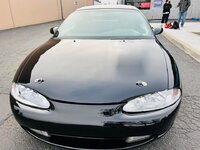
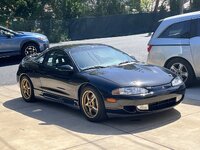
IMG_2936.JPG

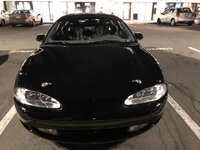
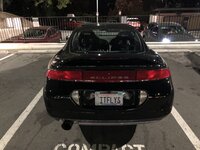
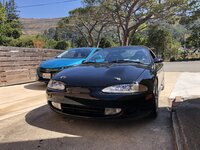
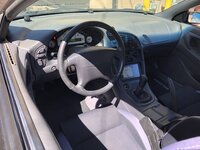
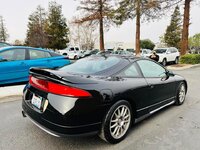
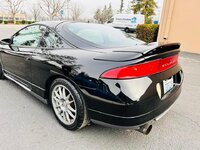
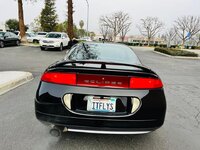
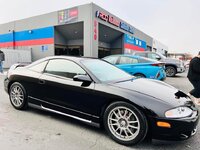
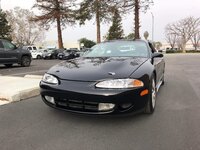
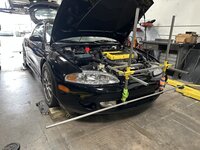
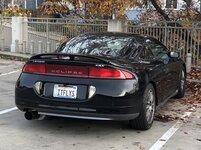
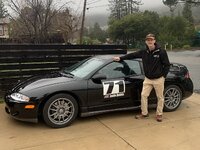
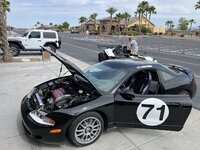
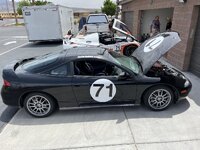
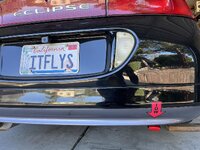
Street Build ITFLYS - 1Gina2G

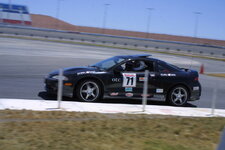
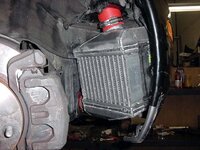
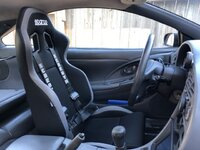
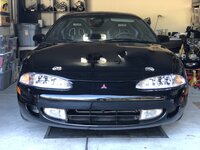
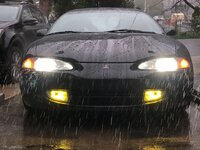
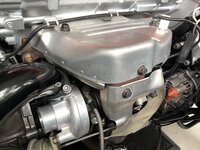
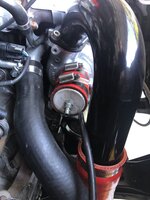
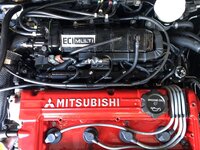
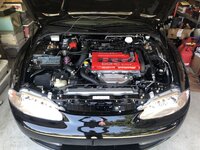
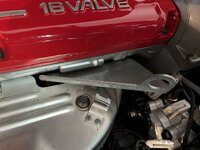
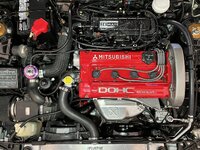
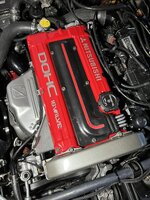
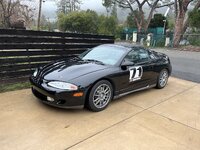
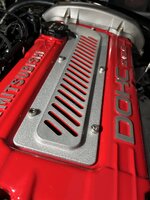
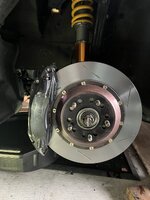
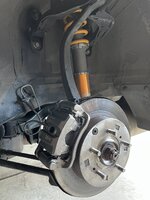
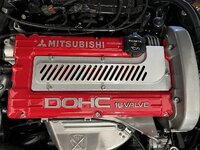
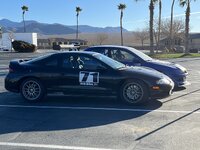
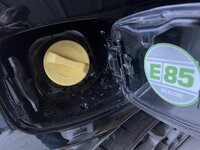
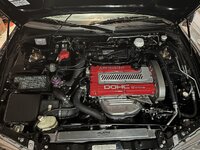
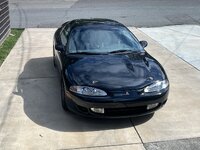
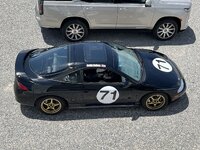
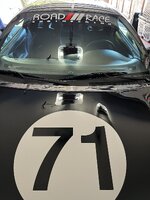
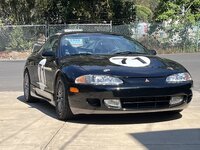
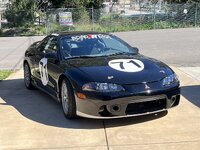
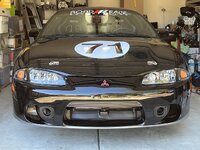
ITFLYS - 95GSX 2.0L 6-Bolt Crank with 2G pistons, 1G TopEnd, with 2Gb-CamSensor and a Kiggly-CrankSensor - TD05H-Bastard 20G - E85 w 1000cc inj. ~25psi. Street driven track day car.

This site may earn a commission from merchant affiliate links, including eBay, Amazon, and others.

oh - ohhh it's just a global click away...
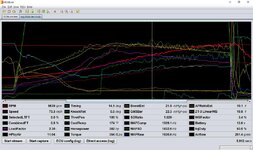
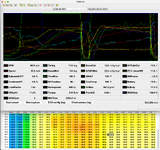
Screenshot 2025-02-24 at 8.04.40 PM.png


Curious about your methodology here? Why drop the boost level instead of calculating for your desired boost level and adjusting fuel to correlate to that?

Don't want to insult your intelligence since you clearly know what you're doing (and you probably know this), but you're aware the ECU is pulling data from multiple cells at one time, not just looking at a singular cell, right?
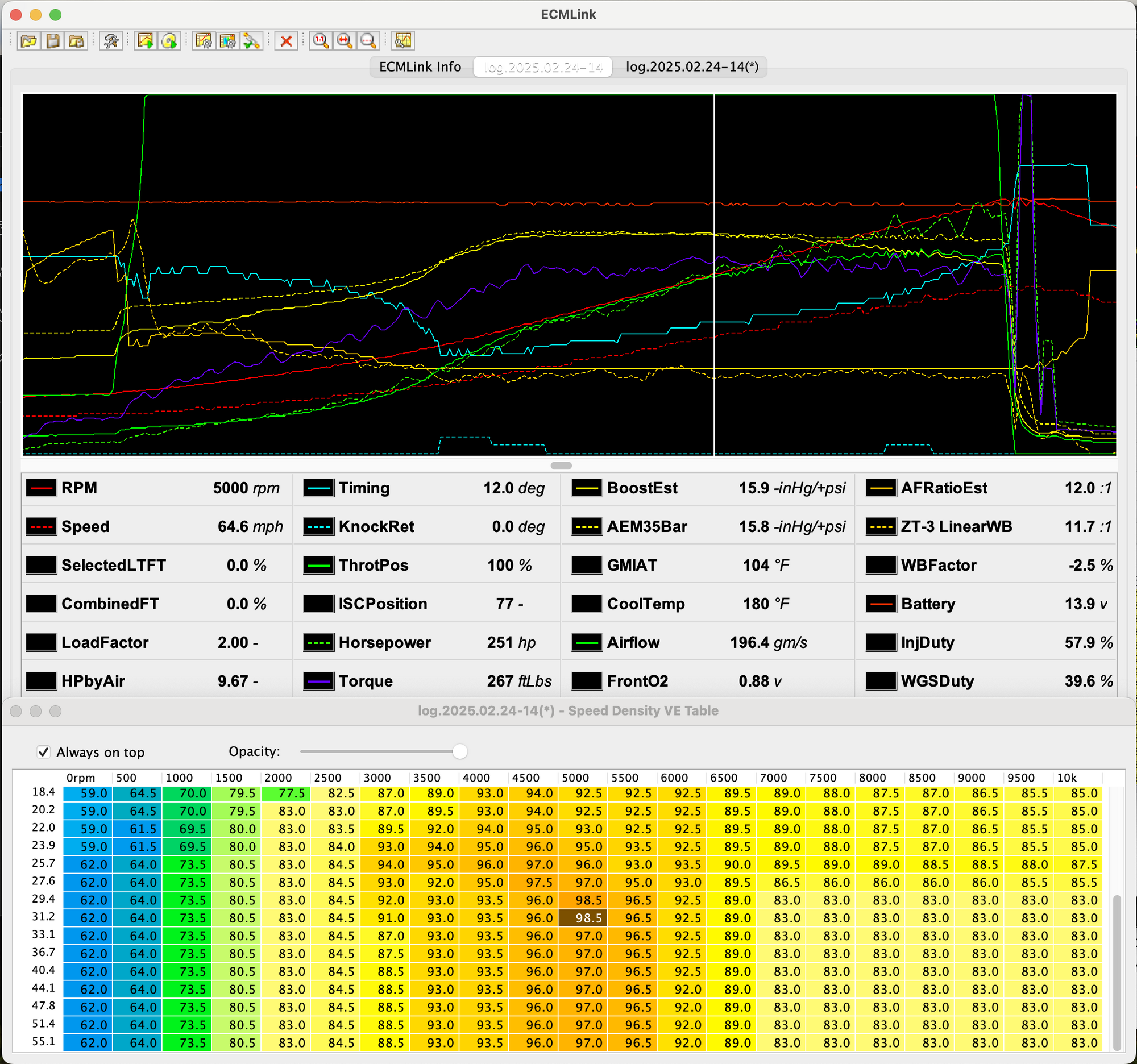
I'm building a new SD map to calibrate for any boost level, so I'm about to make lots of pulls at various boost levels as I work through as much of the WOT map as I can get to.

Before I start - Global fuel has to be correct. I want to set Global Fuel once if I can, and then check it now and again. To check if Global Fuel is correct, I need the RPM ramp to pass through the peak of the VE map, and for my intake, that looks to be 5000rpm at 15psi. - Hence the lower boost WGSDuty. The number in the VE cell at the peak I want at 98-100, and all the rest of the cells should be something less. (If I do it right)
 

Attachments

Last edited:
and for my intake, that looks to be 5000rpm at 15psi
Ah, that makes sense. Did you just do a rough calculation? How are you getting those numbers. I'm not questioning your process, just legitimately interested.

My process for establishing a baseline global fuel value is significantly less scientific 🤣
 
Ah, that makes sense. Did you just do a rough calculation? How are you getting those numbers. I'm not questioning your process, just legitimately interested.

My process for establishing a baseline global fuel value is significantly less scientific 🤣
The peak revealed itself. My aim is to align the AFRatioEst, and the Linear-WB by changing VE cells. When you have alignment (at that boost) the plot overlaps, and the VE map on that path is "good" and it will show you the peak.
 
Last edited:
God your VE map and settings is like pornography. To say I envy your tune is to put it lightly. Would love to be there one day.


22* of timing at the top of the pull and 12.0 AFRs...I bet this thing RIPS. I'm on like 12* and 11.0AFRs and pump 93. And my tune is...yeah we won't talk about that.


Good stuff man.
 
God your VE map and settings is like pornography. To say I envy your tune is to put it lightly. Would love to be there one day.


22* of timing at the top of the pull and 12.0 AFRs...I bet this thing RIPS. I'm on like 12* and 11.0AFRs and pump 93. And my tune is...yeah we won't talk about that.


Good stuff man.
The extra oomf I feel right at redline is making it so I don't want to shift... It finally feels as good at the top of the RPM ramp as it does right before it hits full boost.

Funny thing - the faster it goes - the slower it feels.

You can do this.
 
So close... VE peak now 99's, and the Global fuel is within -0.9% of perfect. If I touch it again, It will probably move to far - but I'm going to go 1/2 the distance and move on to another boost setting.
The values are a percentage of VE. There should be a value of 100 used at peak VE. Even if your engine was on 3cyl and you ran it to redline and insisted on being on 3cyl, some point on the table would be peak VE and the correct value used there would be 100. You could have a 9b or a 42r, doesn't matter because some point of operation you will be at peak VE to which that value should be 100.

I do see you're now away from peak VE being at 4500rpm so part of me just thinks over enough time you will whittle yourself to the fact of peak VE being about 5500rpm and using a value of 100.
 
I do see you're now away from peak VE being at 4500rpm so part of me just thinks over enough time you will whittle yourself to the fact of peak VE being about 5500rpm and using a value of 100.
Yep - agree -
"you will whittle yourself to" the point where it is calibrated. And whittle is exactly what I'm doing. ;-) 100v99 is all good.
 
Like I said before, ECMlink pulls data from multiple cells in the SD map to determine fueling, so focusing too much on individual cell values isn’t really necessary. That said, I get the grind and the time it takes to make tons of pulls just to eke out fine adjustments. I’ve always been a big advocate for a properly calibrated SD table that’s smoothly blended. I can also appreciate scaling the cells correctly—when I see peak VE values significantly over 100, it tells me you’re either lazy or ignorant and couldn’t be bothered to properly set global fuel. I’ve seen plenty of garbage tables where users have huge jumps between cells and then wonder why their drivability sucks.

WOT tuning is the easy part. The real challenge is getting idle right—and cruise is even harder—while blending it smoothly into the peak map. I spent weeks dialing in my cruise tune. Talk about a time suck. I ran ECMlink on my 50-minute, one-way commute for weeks just to get the data I needed to really dial it in.

Almost anyone can throw together a tune that makes 500hp on the dyno, but show me a car that can do that, sit in stop-and-go traffic without dying or idle surging, make a cross-country trip, and still average good mileage. Those are hallmarks of a legit tuner, although, being responsible for a tune that legit passes CA smog is probably qualifying in itself.
 
Like I said before, ECMlink pulls data from multiple cells in the SD map to determine fueling, so focusing too much on individual cell values isn’t really necessary. That said, I get the grind and the time it takes to make tons of pulls just to eke out fine adjustments. I’ve always been a big advocate for a properly calibrated SD table that’s smoothly blended. I can also appreciate scaling the cells correctly—when I see peak VE values significantly over 100, it tells me you’re either lazy or ignorant and couldn’t be bothered to properly set global fuel. I’ve seen plenty of garbage tables where users have huge jumps between cells and then wonder why their drivability sucks.

WOT tuning is the easy part. The real challenge is getting idle right—and cruise is even harder—while blending it smoothly into the peak map. I spent weeks dialing in my cruise tune. Talk about a time suck. I ran ECMlink on my 50-minute, one-way commute for weeks just to get the data I needed to really dial it in.

Almost anyone can throw together a tune that makes 500hp on the dyno, but show me a car that can do that, sit in stop-and-go traffic without dying or idle surging, make a cross-country trip, and still average good mileage. Those are hallmarks of a legit tuner, although, being responsible for a tune that legit passes CA smog is probably qualifying in itself.
This right here. You saved me from ever wanting to type this out.

Dialing in the cruise took me almost an entire summer of driving the car. WOT and even idle was pretty painless but then cruising cells and their transitions are very time consuming.
 
I appreciate the quality of the journey but it's kinda masochism. Put 100 where it belongs and then do whatever you want to the values around it to make afratioest=wb. That's it. What's the reason for anything else?
Heh - is it masochistic to drive 20-93 mph in one pull over and over? I'm having a good time of it. ;-)
 
This right here. You saved me from ever wanting to type this out.

Dialing in the cruise took me almost an entire summer of driving the car. WOT and even idle was pretty painless but then cruising cells and their transitions are very time consuming.
This is why I started with a zero'd out MAF to establish the idle point by tweaking the global dead time to hit 14.7 with 0% fuel trims. You can tweak the VE cells into AFR alignment from any starting point. If you choose a bad starting point - whole portions of the VE map will be biased. Lets not forget, I'm working with stock 1G cams. These have easy drivability part throttle. The part throttle cruise snapped in without much fuss - Base fuel pressure and global dead time is doing the heavy lifting, and then SD VE adjust is doing the rest.
 
This one is for @Stapl3 - I got your 100's right here:
Screenshot 2025-02-28 at 7.21.09 PM.png


And you can see 100 at 5500 isn't calibrated for this intake. It just depends on the mix of stuff you have. I had to come back to my favorite spot later in the day for this one, cause the highway patrol was camped out on my on ramp... (probably looking for me)

Screenshot 2025-02-28 at 7.43.47 PM.png
24deg of timing is probably too much? I've been looking at HPbyAir as an indicator to adjust timing. 10's are supposed to be good. There is a spot at 6800rpm that hits 12 (too much?)
 

Attachments

Last edited:

It just depends on the mix of stuff you have.
This 100%.

At the end of the day, log data > theoretical data. There's a ton of great data in this thread demonstrating some fundamental truths about making assumptions, but then doing the work of actually confirming they are accurate. This is also why forums > Facebook. If you read through this data with the intention of truly understanding it, you're going to get a massive amount of benefit from it. Kudos to Justin for taking the time to throw all of this up on the forum.

Regarding timing, at 15 pounds of boost, you can probably run any timing advance you want on E85. Double that boost pressure, and you're going to need to be significantly less aggressive with your peak timing values if you don't want bad things to happen.
 
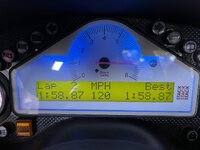
4hrs of F1 practice - woot!

Worksheet - new SD adjustments - no global adjustments.
Screenshot 2025-03-01 at 2.11.47 PM.png

The thick cyan line is HPbyAir. The bump to HP numbers at 15psi is mostly related to a lack of knock and an increase in timing. John's advice for timing when going from gasoline to E85 "4 more than where you were" - I think I'm already beyond that between 6-7k, so that's got me thinking. I need to do some research on the indicators tuners use when the knock sensor is no longer the limiting factor.

Screenshot 2025-03-01 at 2.14.36 PM.png


I'm going to upload these changes - and go for a minimum boost run - maybe a part throttle cruise, and see where the VE adjust goes.
 
Full stop - What was a curious discrepancy is now a problem. My WB gauge says 14's and ECMLink is reporting 15's in the log. There seems to be a floating voltage going on in my WB signal to the ECU. I'm not sure if its the ECU or the Wiring, or the WB controller itself. The gauge value appears to be more correct - I see 11.8-12.1 (targeting 12) while driving WOT, but the logs are recording 13's. It is not driving like 13's or making intake temps like 13's - so I think the input voltage or possibly the sensor ground is floating.

Anyone else have this happen?

More evidence - I have a stock front o2 for narrowband for closed loop, and idle is 14.7 on the gauge (good) but log is showing 15's (bad)

0-5v output/input from the WB controller is not correct.
 
Last edited:
0-5v output/input from the WB controller is not correct.
I'm looking at your RawLinWB volts and I see that the scaling for LinWideband is not right.
For instance in your 2025.02.28-12 log at 419.782 seconds:
RawLinWB = 2.53 volts
LinWideband says 15.3 which is wrong scaling because:
(2.53 x 2) + 9.6 = 14.66 AFR and that is probably a good answer because you are in closed loop with front O2 cycling nicely.

In the same log at 389 seconds it is full lean coasting down on 0% throttle:
RawLinWB = 5.00 volts, awesome that's a boundary check.
LinWideband says 21.0 which is wrong because Zeit says 5.0 volts = 19.6 AFR

And there you have it if I'm looking at the right info for the ZT-3!
 
I'm looking at your RawLinWB volts and I see that the scaling for LinWideband is not right.
For instance in your 2025.02.28-12 log at 419.782 seconds:
RawLinWB = 2.53 volts
LinWideband says 15.3 which is wrong scaling because:
(2.53 x 2) + 9.6 = 14.66 AFR and that is probably a good answer because you are in closed loop with front O2 cycling nicely.

In the same log at 389 seconds it is full lean coasting down on 0% throttle:
RawLinWB = 5.00 volts, awesome that's a boundary check.
LinWideband says 21.0 which is wrong because Zeit says 5.0 volts = 19.6 AFR

And there you have it if I'm looking at the right info for the ZT-3!
I would like to think this can be solved with a simple sensor setup - I need lambda (vs AFR) numbers the voltage setup.

Screenshot 2025-03-04 at 8.38.50 AM.png


Screenshot 2025-03-04 at 8.45.20 AM.png

This change does impact the WB Factor calculation! - I'll see if this gets the logs back in line with the digital gauge.
 
Last edited:
I would like to think this can be solved with a simple sensor setup - I need lambda (vs AFR) numbers the voltage setup.

View attachment 758179

View attachment 758180
This change does impact the WB Factor calculation! - I'll see if this gets the logs back in line with the digital gauge.
This is certainly better aligned with the digital gauge. It does not address some of the weird issues with the AFR dancing about, but I'm going to get some more data today running like this.
 
Today - this is more normal - Minimum boost with a 1.5 bar WG spring. To get less boost, I'd need to swap in a softer spring.
Screenshot 2025-03-04 at 4.46.37 PM.png


The best part about this pull - The on-ramp is a 2-1 lane merge - and the beat up prelude that thought they were going to slide by me, got about even with my door, when I hit 3000rpm - and then I looked left, and laughed. Even at minimum boost, this was not going to go well for them.
 

Attachments

Last edited:

Add Value - Be Respectful - No Trolling - No Misinformation - Participate Often!
Support Vendors who Support the DSM Community

Build Thread Updates

Latest Classifieds

Back
Top