

The Central Hub for DSM Community and Information

For 1990-1999 Mitsubishi Eclipse, Eagle Talon, Plymouth Laser, and Galant VR-4 Owners. This is where the DSM platform history is documented and archived. Log in to help us in our mission, and to remove most ads from the browsing experience.

20231029_160050.jpg

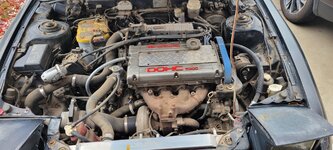
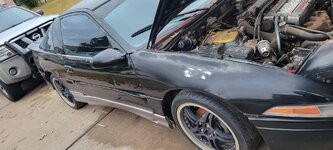
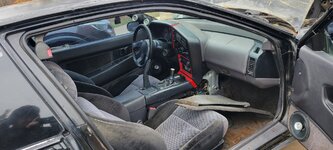
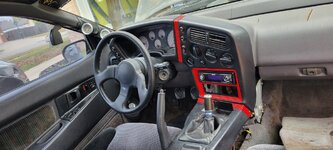
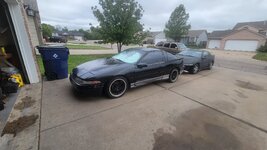
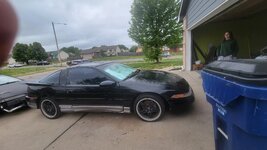
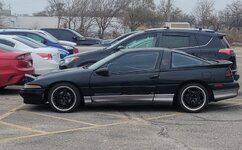
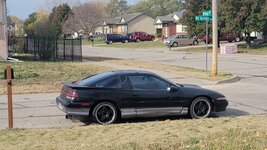
My old highschool car

I regret getting rid of this car but have it back again!!!

This site may earn a commission from merchant affiliate links, including eBay, Amazon, and others.

Here is the log. I switched out the radiator fan sensor and still no fan. So i un plugged it and jumped the sensor and the fan came on. Maybe i need the clean out the sensor? I am going to put the old one back in the radiator to plug the hole as i take a lighter to the sensor rod plugged in to see if that will trip the fans to come on
 

Attachments

Here is the log. I switched out the radiator fan sensor and still no fan. So i un plugged it and jumped the sensor and the fan came on. Maybe i need the clean out the sensor? I am going to put the old one back in the radiator to plug the hole as i take a lighter to the sensor rod plugged in to see if that will trip the fans to come on
Ok good log. The fueling is definitely better.
It's ok to run the fan the whole time the key is on if you can jumper it safely. The way to jumper it safely is to jumper the cooling fan relay. At the moment I don't remember the details of how to do that though! Have you ever replaced that relay? Have we messed with that relay before? I don't remember now.

So with the log, it's usually knocking a lot when the LoadFactor goes over 1.4 with RPM over 4500 and MAF Hz around 1300 and higher.
I think the timing should go down to 10 degrees in that whole area, for now.
Like this, in both the MaxOct and MinOct tables:

Timing - change to 10 deg from 1.4 LF and 4500 rpm.PNG


The fuel, in your closed loop areas the fuel trims look like it could use about 10% more fuel in most places. This is less of an increase than it looked like back in post 209. That must be because your injectors and rail are good now, so it doesn't need as much more as I thought in 209, but it does need more.
So I did a "MAFComp Adjust" on your latest log and came up with this (pic) for what I think you should change your yellow dots to on the MAF Comp page. I didn't use the white template dots exactly because they are a little un-smooth, but I went close. Above 500 Hz the white dots are no good so ignore them there.
Just pull your yellow dots up to be like this - with the numbers in the "Adj %" column same as in my pic.
Having more fuel like this should also help reduce the knock.

MAF Comp for now with the good injectors.PNG
 
Last edited:
Ok. thank you. I will get these adjusted today and get another log posted. Thank you.

No the fan relay has never been touched. I am going to mess around with it a little more this weekend.

I have no idea and am learning as we go with the tunning stuff LOL. Do i need to put the timing Min a little bit lower then the timing max or will is it ok being the same for min and max? Is that just adjusting the timing to less and closer to base (5) as it hits those rpm.

The load factor is going to be the fuel load meaning boost levels, right? Full throttle high rpm in full boost would be a high load factor? Sorry for dumb noob questions LOL Like i said learning as i go and reading what i can but don't want to always believe what i read. I know you and others on here have first hand experience and know it as dealing with it yourself and not just a keyboard knowledge warrior that has never done it themselves LOL. So thank you for helping so much!!!!!
 
Do i need to put the timing Min a little bit lower then the timing max or will is it ok being the same for min and max? Is that just adjusting the timing to less and closer to base (5) as it hits those rpm.
No the Min doesn't have to be lower. So for this change to 10 degrees in that large swath in the lower right of the chart, put the same swath of 10 degrees into the MinOct map. The MinOct map does have slightly lower numbers in the other parts of the map and those are probably good so you can leave those as is.

I looked at the logged parameter "Octane" to see if it is even using the MinOctane map and it really isn't! The theory is for the MinOct map to have lower numbers that are like fall-back numbers for it to use if there is a lot of knock. But the way it is implemented, it doesn't seem to actually do that when the knock is in high LoadFactor areas. It must have been intended for low LoadFactor help, like when you are out camping in the middle of nowhere and your car runs out of gas, so to make it to a gas station you pour in your gallon of white gas that you have for the camping lantern and that is like maybe 50 octane or whatever. It might be 0 octane. I don't know what that stuff is. But I've had it happen in the long-ago and the VW Square Back ran with it. Poorly. I bet that would use the MinOct map in a modern car.

Anyway, right now we are only lowering timing to try to get rid of knock wherever it happens, and we are changing large blocks of cells at a time to do it. Later we should be able to bring timing back up a little bit in certain areas when we get a better idea of where it could go up. When we do that (raise timing in some areas) I think we would raise it only in the MaxOct map, and leave the low values in the MinOct map.


The load factor is going to be the fuel load meaning boost levels, right? Full throttle high rpm in full boost would be a high load factor?
Yes that's about right. More air and more fuel at a given RPM means higher load factor. I think of it as indicating the amount of pressure from combustion that you have in the cylinders. Higher load factor means there's more cylinder pressure during the combustion stroke. So with more boost and more airflow and fuel, you have higher LoadFactor. They have kind of normalized the quantity so it comes out to about 1 when you are wide open throttle with no boost. I mean at basically any RPM, if you are WOT and have no boost, the LoadFactor will be about 1. Then it goes up from there with boost.
Higher RPM all by itself doesn't make load factor go up, but it does get more exhaust energy to the turbine wheel if you are into the throttle enough, so then the turbo will make more boost and give you higher load factor.

On your car, you are not logging Boost or MAP pressure, so we don't know for sure when your turbo is starting to make boost. But by looking at LoadFactor we will be able to tell roughly. Right now it looks like at about 4200 rpm it starts making boost. But you are using less throttle, so it's not a fair test. Your turbo is bigger than stock, so it will make boost a little later than a stock turbo would. Anyway, that rpm area where the turbo boost comes up and peaks, that is usually where you want the lowest ignition timing numbers and the richest air/fuel. Lower timing numbers means less ignition advance, ignition happens closer to TDC. A minus number means ignition is happening after TDC.
 
Last edited:
Here is a log from saturday. I got a log in before i realized that the battery is shot in the talon, I am going to get it replaced in a week or 2.
Well, it's running out of injector (duty cycle 100%) at a Load Factor of about 1.9 and then above that the knock gets bad.
Even below LF of 1.9 it starts knocking but there we might be able to keep it from knocking by reducing timing some more in the block of cells that goes from 4000 rpm to 5500 rpm and is Load Factor 1.4 and higher.
Above LF of 1.9 it's probably hopeless to control it in the car's current configuration.

Apparently there is no boost controller in V3 Lite, and boost control is one thing you need right now.
If we could limit boost to something like 12psi, then I think it would be a lot safer. It would still run out of injector probably but not so suddenly like it does now at only about 5,000 rpm which is where your turbo really wants to go hard.
You have a boost gauge in the car I think? Do you recall what boost it was getting up to in these pulls that are in the log?

On the plus side, your fuel trims look really good now in closed loop. Your Combined Fuel Trim is usually not far from zero. So I think the MAF Comp is good right where it is.

For the timing, let's try putting in the numbers you see in in the highlighted cells that go from 4000 to 5500 rpm and from LF 1.4 and up. Like this, MaxOct and MinOct both:

Timing changes in block from 4000 rpm to 5500 rpm and LF 1.4 and above.PNG
 
If your boost was going over about 12 psi on that drive, we should probably setup the turbo to run at minimum boost. "Spring Pressure" boost. That's a simple way that doesn't use any solenoids or controllers. All you do is run a hose from the wastegate actuator to the fitting on the turbo outlet.
We don't know what the Spring Pressure boost is of your turbo. A regular boost controller setup can't make boost lower than Spring Pressure boost. It can only make it higher.

But before doing that, let's get a couple pics of how the hoses run there now. There should be a hose going from the wastegate actuator to somewhere, and a hose going from the turbo outlet to somewhere. Maybe they both go to a T, and then another hose would go from the T to the stock wastegate solenoid.
Here's a diagram that shows the stock system. This is from an ECMtuning wiki.


stock boost control diagram - ECMtuning - showing wastegate actuator, stock solenoid, turbo, M...PNG
 
I will get those changed over and get a pic taken of the turbo and actuator. It seems like my issue is fuel right now becasue of the turbo size dosnt match the fuel system requirements.
Would i be best to stick with the 1000 injectors i have or could 550 injectors be thrown in without a fpr and pump? If so would the 550 be enough more fuel or would i be better to just save up and throw the 1,000 in?

Thank you again for helping me with the gary!!!!!! I appreciate it so much man!

Also do you work night shifts? Your posts are always right before i wake up for work LOL. I go to work from 4 am - 230pm. I always try to be at work by 3 but thats to early. 4 is really early LOL
 
I will get those changed over and get a pic taken of the turbo and actuator. It seems like my issue is fuel right now becasue of the turbo size dosnt match the fuel system requirements.
Would i be best to stick with the 1000 injectors i have or could 550 injectors be thrown in without a fpr and pump? If so would the 550 be enough more fuel or would i be better to just save up and throw the 1,000 in?

Thank you again for helping me with the gary!!!!!! I appreciate it so much man!

If your fuel pump is the stock pump, then I don't think 550cc injectors would help, because the stock pump is probably running out of steam at about the same point as the stock injectors. If you did have a bigger pump in it, then 550cc would help for a ways.
The stock intercooler is part of the problem too. You can only go so far on gasoline with the stock intercooler, and it's not very far.

I sort of remember that people found they could use the Walbro 190 liter per hour fuel pump with the stock pressure regulator. The Walbro 190 costs just as much as the 255. As far as I know, the current model number of the 190 model that fits AWD DSM 1g cars is GSS278.
Walbro 190 LPH with Install Kit: Mitsubishi Eclipse 90-94 AWD Turbo
That link goes to an Extreme PSI web page, and I think they would be the best place to buy one from. They apparently have them in stock, their price is good, they've been selling these things forever, and the information on their web page looks all correct. Some of the other shops like STM don't even show the GSS278 anymore, they only show the GSS250 which is for the front-wheel-drive cars.

So that's one possibility. A 190 would take you about as far as 550cc injectors would, and for that matter you could use the 1000cc injectors with it rather than going out and spending money buying 550's if you don't already have them.
Anyway the idea of the 190 is just that I think you could use it with the stock fuel pressure regulator. The 190 flows more fuel than stock but not enough more to overrun the stock regulator. And the 1000cc injectors you could use with the stock regulator also. You don't have to have 43psi of base fuel pressure to use the bigger injectors. You can use them with the stock fuel pressure, which is 37psi.

Also do you work night shifts? Your posts are always right before i wake up for work LOL. I go to work from 4 am - 230pm. I always try to be at work by 3 but thats to early. 4 is really early LOL
LOL no I actually don't work at all! But I'm a late guy. Get to bed late at night, get up late in the morning. Today I actually got up early (9am) just so I could get out on the road with the Talon by about 1pm. That's still early enough to not be in heavy traffic here.
 
Last edited:
I do have a walbrol 255 fuel pump
precision 1000 injectors
FMIC with piping
Its all just waiting in the garage. The FMIC i have read is a huge pain in the ass. So pretty much i am needing to get all of that installed as i am at a brick wall and we have done eveything else.

I will make those adjustments and make another log this weekend. I am getting a battery for the talon on friday.

I am looking forward to retire LOL. So excited to make it there and the house paid off, just still got 30 years OMGLOL
 
I do have a walbrol 255 fuel pump
precision 1000 injectors
FMIC with piping
Its all just waiting in the garage. The FMIC i have read is a huge pain in the ass. So pretty much i am needing to get all of that installed as i am at a brick wall and we have done eveything else.
The piping that you have for the FMIC, is it the "short route" kind that goes through the front bulkhead sheet metal - you know, where the 2 pipes go straight back from the IC and go through 2 holes in the bulkhead that are already there but they aren't big enough so you have to make those holes bigger first. With that type, making the holes bigger is probably the main pain. Your turbo compressor outlet is already down-firing type so that is good. Your blow-off valve has to go on that piping somewhere and usually the piping kits have a mounting flange for the BOV. That's another ? item, the BOV.

Or is the piping the other type that sort of goes under the car rather than through those 2 holes?
Mine is the first kind (short route) but I let English Racing do the entire install for me so I am not an expert on doing it.

Yeah it's a bunch of stuff. You'd still need an aftermarket fuel pressure regulator like a Fuelab 515 to handle the Walbro 255.
And a wideband to help with tuning.
Then with all that stuff your limitation will be the 1g MAF. That's when people often switch to speed density, or you might try to reuse the GM MAF and translator.
Well you already know all that stuff.
Hey one more question though, is your FMIC the kind that is only about 7" high or is it the full height type that is usually 10 or 11 inches high? The shorter type should be better for letting air through to the radiator for engine cooling, and the taller type is of course better for cooling the intake air.
 
Last edited:
I will take a pic and measure the FMIC then pull out the piping this weekend. I didn't purchase it, it came with the car when I got it back.

I am assuming it's an ebay fmic and piping kit which might be universal so idk tbh bur will find out this weekend. I know there is a peice that has a spot for the bov which I would be using mine which is the hks ssq.

Here are pics of the wastegate actuator on the turbo also. I think making an adjustment on the nut to lengthen the rod will lower the boost.

Once I got everything in, I would give the Gm maf a go again with th4 car running good. If it didn't work at that point, I would just get speed density as I would need it to complete it. This will take some time LOL but goals.

20250326_191437.jpg


20250326_191356.jpg
 
Last edited:
Here are pics of the wastegate actuator on the turbo also. I think making an adjustment on the nut to lengthen the rod will lower the boost.
Don't change the length of the actuator rod as a first try at lowering boost. Instead, we should rig the turbo to run at minimum boost the regular way which is by running a little vacuum hose from the turbo outlet directly to the wastegate actuator canister.
In the pic I see the little hose coming off of the wastegate actuator canister. But we need to see where that hose goes to.
 
I made those timing adjustments, put a new battery in, and also a bottle of octane booster. This is a pretty good log i feel like. I did do some pulls and drove around on highway, There was not any knock lights comeing on.

Thank you very much.

The line that goes to the wastegate to a t that runs from bov to a spot behind the middle of fuel rail.
 

Attachments

This is a pretty good log i feel like. I did do some pulls and drove around on highway, There was not any knock lights comeing on.
Yeah, that really looks a lot better in the high load factor areas (~1.6 and above) where the new lower timing has pretty much eliminated the knock.
I still see small amounts of knock in some places where the load factor is low, like less than 1, and rpm is between 2000 and 3000. The high timing in those areas (~28, 30, around in there) could come down a little and we could try that pretty soon to see if it makes any difference. Sometimes knock in those low areas is 'phantom' knock. But we could try a few degrees less in those areas to see if it gets rid of that too.
I'm glad it has responded well to the lower timing in the high load factor areas.

Injector duty went over 100% at 441sec (3rd gear) and 445 (4th gear) and it only knocked in the 4th gear one.
You are doing really good at holding it down so that it doesn't get too deep into the injector overrun area.


The line that goes to the wastegate to a t that runs from bov to a spot behind the middle of fuel rail.

Good job with the video.
So you've got a vacuum hose running from the intake manifold plenum chamber to a T. Then from the T there is a hose going to the BOV and a hose going to the wastegate actuator.
That is ok for the BOV, which is supposed to go to the intake manifold (although preferably with no T).
But it's not the best for the wastegate actuator. The wastegate actuator port is supposed to be connected to the turbo outlet. That could be a fitting right on the turbo's compressor housing outlet, or it could be a fitting anywhere in the intercooler piping before it gets to the throttle body.
It might not make much of a difference at WOT. But at partial throttle like what you are doing for safety, it makes a difference, because there will be a pressure drop across the throttle butterfly when it is only partly open. So you would get lower boost at part throttle if the wastegate actuator was connected straight to the turbo outlet. How much lower I don't know, but it should be a little lower.

From the video, it looks like there is not a boost control solenoid in there anywhere, or if there is one it is not hooked up. That's ok, since we're wanting minimum boost for now.
 
Last edited:
I will look and let you know where the boost gauge is hooked up to and yesterday I was seeing it over at 17 pounds but also making sure the check engine light wasn't coming on.
Yeah I know, it's kind of hard to watch gauges while doing a pull on the road. Sounds like it was definitely going over 15 psi though. 15 psi was the boost level I settled on for good power without knock when I had the stock intercooler. I also still had the stock 14b turbo at that time too though. Your turbo is bigger so it won't heat the air as much as a 14b and it won't restrict the exhaust as much as a 14b. That should help a little.
 
Update, Still running great! Thank you Gary and everyone else that helped.

Today I did a full send pull as i watched the gauge. For sure pegged the gauge at 20 psi and I could feel it like start to break up so I got out of it as soon as it stopped being smooth.

Definitely gotta get a lower boost level so I will get the vacuum lines re ran and won't use the T that's in it now.
 
Add Value - Be Respectful - No Trolling - No Misinformation - Participate Often!
Support Vendors who Support the DSM Community

Build Thread Updates

Latest Classifieds

Back
Top











