dsm-onster
DSM Wiseman
- 8,592
- 130
- Jul 11, 2004
-
Bloxom,
Virginia
Here's a few pics of how I avoid hours of porting yet still eliminate that terrible "down-step" going from a 2g manifold to any 7cm^2 turbine housing (16g, 18g, 20g). It involves a piece of 2" galvanized pipe from Lowe's or home depot.
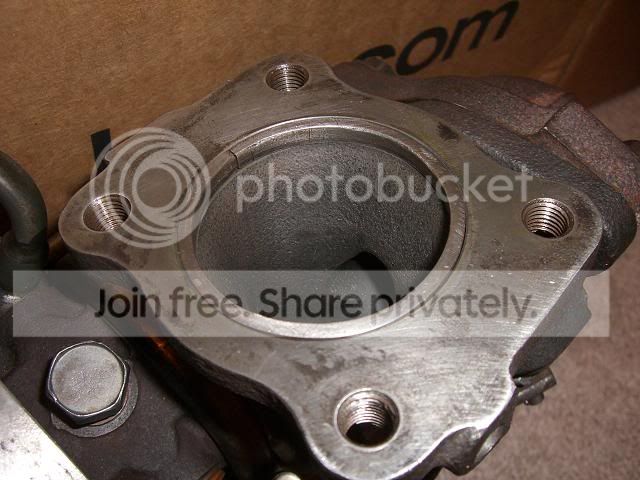
A 2g manifold has a step in it. The outermost inside diameter is about the same size as the innermost inside diameter of a 7cm^2 turbine housing. You can port, which will open up the collector volume even more. I consider the inlet of the turbine housing part of the collector. Having a small runner open into a larger collector volume slows velocity. Instead, you can use an evo3 manifold and actually use the sealing ring. Or you can do this and keep the 2g manifold. The step in the 2g manifold does not create nearly the turbulence since you're going from a smaller diameter to a larger one. One little thing to note is that many ebay manifolds have a outlet port diameter about equal to the outermost diameter of the 2g manifold step. And there is no step . Add the below to this, and you have a great transition that sacrifices as little velocity as possible to get the gases into the turbine housing.
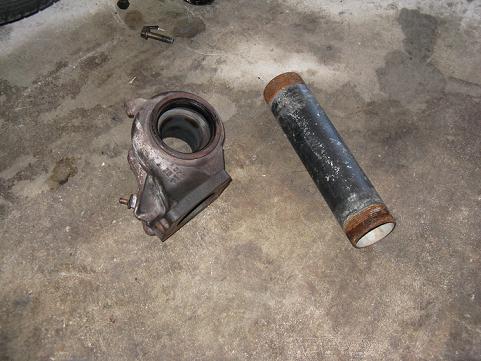
2" galvanized pipe from the hardware store is pretty much a perfect fit into the step footprint of the 7cm^2 turbine housing.
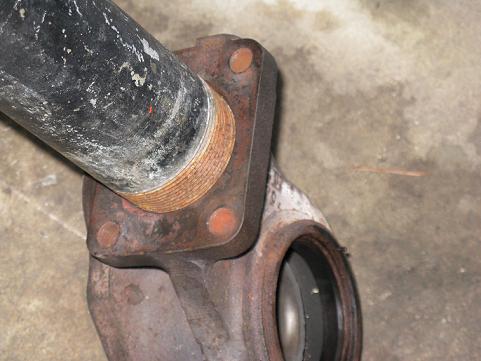
Simply scribe out the height necessary for a piece of pipe to set flush in the housing. ****EDIT: Put the gasket flat on the turbine housing when you're doing this so that you will accomodate the difference in the gasket thickness. This will give you the best transition and seal the exhaust gases from the gasket, taking some stress off the gasket.
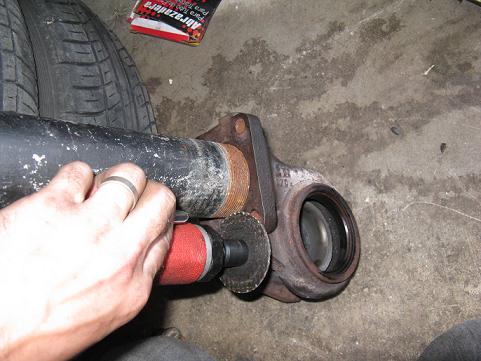
Now cut it.
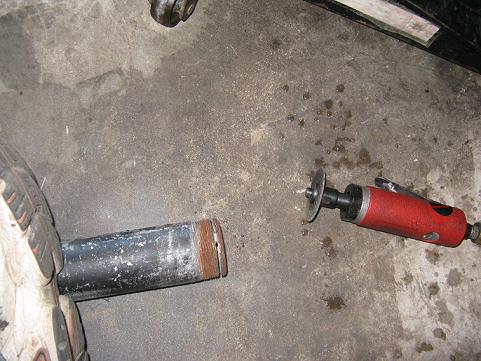
Fits nice, but be sure to clean up the cut.
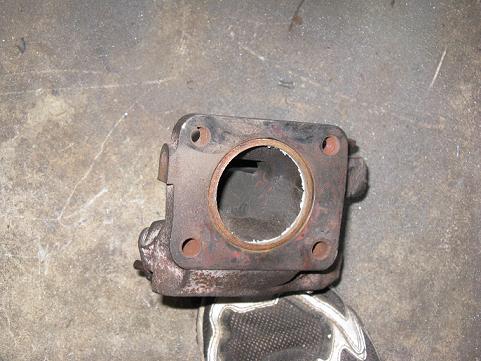
Now you have saved a few hours porting that turbulent down-step with a smooth transition from to 2g outer diameter and haven't opened up your collector volume any more.
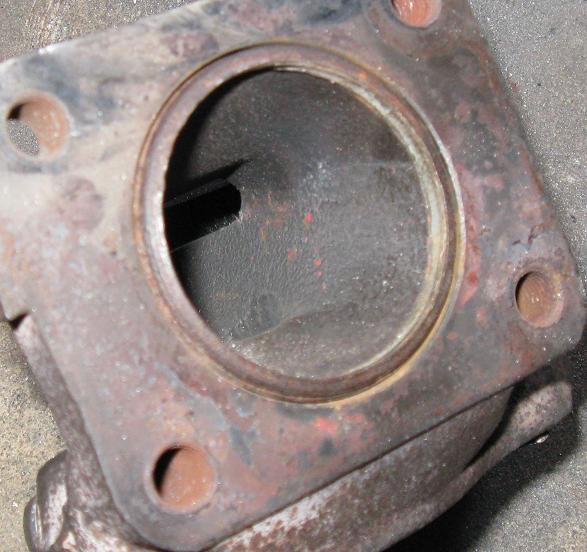
As I mentioned and re-mentioned for emphasis, the ebay manifold we are using doesn't even have a step in it's outlet. Just a diameter equal to the outer diameter of the 2g manifold. This makes for a very nice transition. No hours of porting. And the manifold has held up for about a year before this "re"-build with a terrible knocking tune (lots of exhaust heat from timing retard).
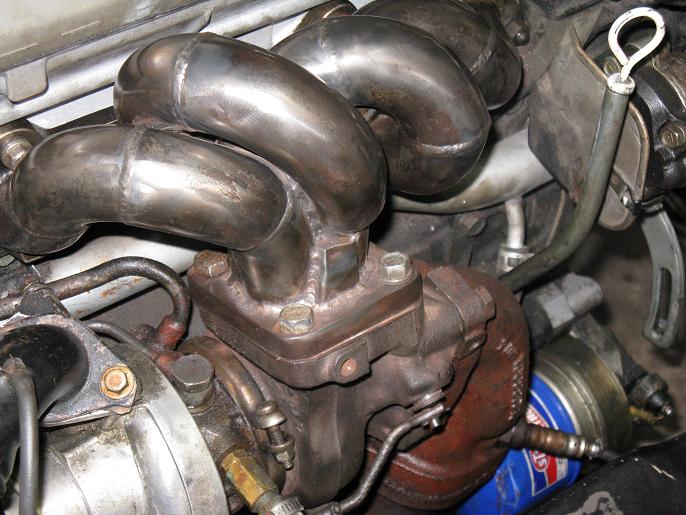
Smooth transition. Good "angle of attack" to the turbine housing. ROUND ports. Equalish length (good for preventing back flow during overlap). All the main bullets for a fast spooling hot-side
A 2g manifold has a step in it. The outermost inside diameter is about the same size as the innermost inside diameter of a 7cm^2 turbine housing. You can port, which will open up the collector volume even more. I consider the inlet of the turbine housing part of the collector. Having a small runner open into a larger collector volume slows velocity. Instead, you can use an evo3 manifold and actually use the sealing ring. Or you can do this and keep the 2g manifold. The step in the 2g manifold does not create nearly the turbulence since you're going from a smaller diameter to a larger one. One little thing to note is that many ebay manifolds have a outlet port diameter about equal to the outermost diameter of the 2g manifold step. And there is no step
. Add the below to this, and you have a great transition that sacrifices as little velocity as possible to get the gases into the turbine housing.2" galvanized pipe from the hardware store is pretty much a perfect fit into the step footprint of the 7cm^2 turbine housing.
Simply scribe out the height necessary for a piece of pipe to set flush in the housing. ****EDIT: Put the gasket flat on the turbine housing when you're doing this so that you will accomodate the difference in the gasket thickness. This will give you the best transition and seal the exhaust gases from the gasket, taking some stress off the gasket.
Now cut it.
Fits nice, but be sure to clean up the cut.
Now you have saved a few hours porting that turbulent down-step with a smooth transition from to 2g outer diameter and haven't opened up your collector volume any more.
As I mentioned and re-mentioned for emphasis, the ebay manifold we are using doesn't even have a step in it's outlet. Just a diameter equal to the outer diameter of the 2g manifold. This makes for a very nice transition. No hours of porting. And the manifold has held up for about a year before this "re"-build with a terrible knocking tune (lots of exhaust heat from timing retard).
Smooth transition. Good "angle of attack" to the turbine housing. ROUND ports. Equalish length (good for preventing back flow during overlap). All the main bullets for a fast spooling hot-side

 I didn't think to look at threaded pipe.