The Central Hub for DSM Community and Information

For 1990-1999 Mitsubishi Eclipse, Eagle Talon, Plymouth Laser, and Galant VR-4 Owners. This is where the DSM platform history is documented and archived. Log in to help us in our mission, and to remove most ads from the browsing experience.

518328147_10162920648317559_562763132815609470_n.jpg

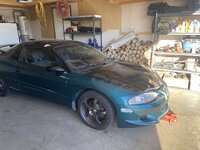
1998 Eagle Talon TSI AWD

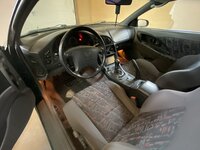
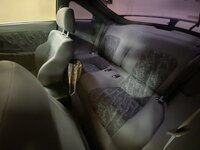
Rare 98 black and green talon with grey confetti interior, no sunroof.

This site may earn a commission from merchant affiliate links, including eBay, Amazon, and others.

Back in the Game – My 1998 Eagle Talon TSi AWD Build​

First off, I want to say how thankful I am for the DSM community. After a 13-year hiatus, I’m finally back behind the wheel of another DSM — and it feels great to return!

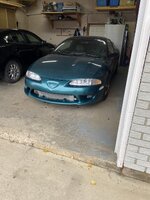
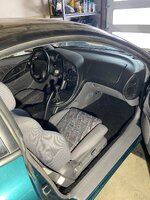
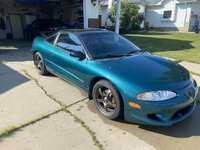
In July 2025, I found and purchased a rare 1998 Eagle Talon TSi AWD finished in Green Polo Metallic, with a Black Hardtop, Grey Confetti Cloth Interior, and Black Dash — located out in Alberta.

This car has quite a history. It was disassembled roughly ten years ago and later rebuilt by fellow DSMer Steve, who documented the restoration in detail on his YouTube channel, Tuner Torque TV. You can check out his series here:
🔗 Tuner Torque TV – 1998 Talon Build

After Steve completed the rebuild, he sold the car to another enthusiast who, fortunately (or unfortunately), didn’t have time to give it the attention it deserved — which is how it eventually made its way to me.

This build thread will document my progress with the car: the highlights and headaches, challenges and triumphs, and everything in between. I’m excited to share this journey with everyone here on DSMtuners and hopefully contribute something useful along the way.


A Special Thanks​

I also want to acknowledge and thank this community for putting together the comprehensive list of 2GB Eagle Talons — an incredible resource that catalogs VINs submitted by owners worldwide. Using that list, I was able to confirm this car’s potential rarity. According to the data, it appears to be a possible 1-of-1 specification example. Pretty wild to think about!

Here are the resources for anyone interested in diving deeper into the data:
🔗 CA DSM Forum Thread
🔗 2GB Talon VIN Spreadsheet
🔗 VIN Analytics (Form 1)
🔗 VIN Submission Form


Note: Updates will likely be on the slower side — I tend to wrench in the winter and drive in the summer (hopefully 😄).
 

September 2025 Update – FMIC Install & a Wiring Surprise​

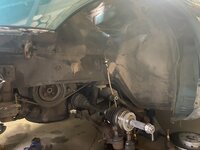
By September 2025, after driving the car as-is for the rest of the summer, tackling some maintenance, and experiencing a few of those earlier-mentioned headaches — including a broken front driver-side axle, leaking transfer case output shaft seal, leaking oil filter housing coolant supply line, installing a missing A/C compressor tensioner pulley and belt, adjusting the throttle cable, replacing fluids, and doing an oil change — it was finally time to start adding some supporting mods.
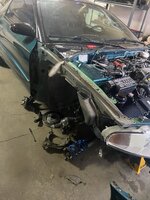
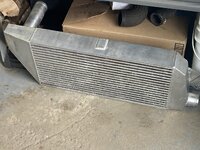
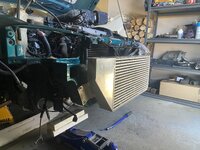
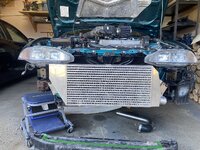
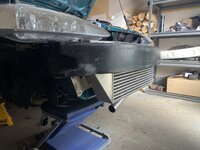
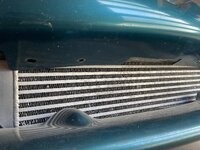
First on the list: a short-route front-mount intercooler (FMIC).

I picked up a short-route kit from another local DSMer here in Alberta, along with a GReddy BOV to pair with it. The car originally had a 1G BOV, but it had a nasty boost leak, so replacing it was a no-brainer.


The Unplanned Wiring Adventure​

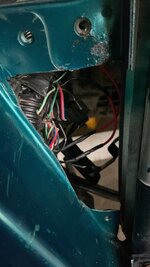
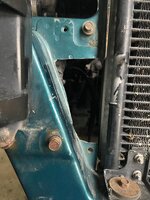
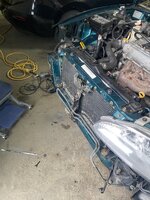
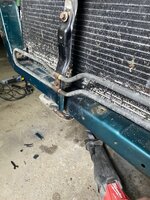
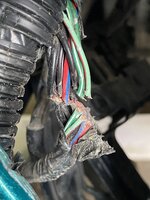
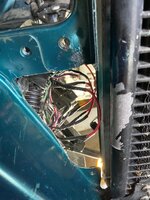
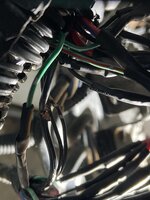
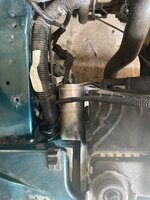
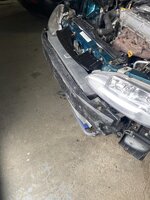
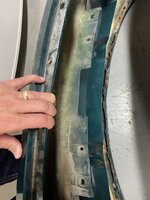
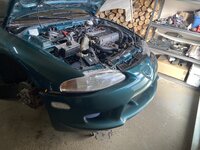
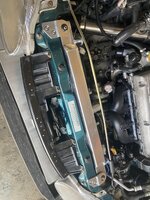
In my eagerness to get the new setup installed, I rushed the cutting process while notching out the section next to the radiator support bracket — and, regrettably, completely cut through the passenger-side front harness near the headlight. That unexpected mistake produced a few choice words as I spent the next while carefully rewiring and splicing the harness to restore full function. Lesson learned: measure twice, cut once!


FMIC Installation & Finishing Touches​

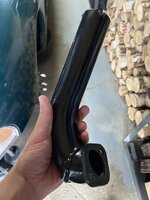
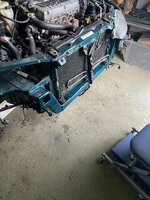
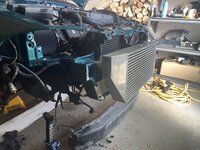
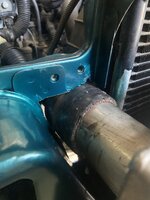
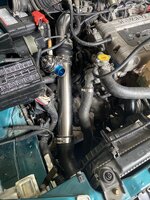
Once I got past that mess, the FMIC install went smoothly. I used an old 2.5-inch coupler as a bushing around the cold-side charge pipe where it passes through the radiator support. That small detail helps prevent any metal-on-metal contact that could eventually wear a hole through the piping. With everything lined up and tightened down, the installation was complete.

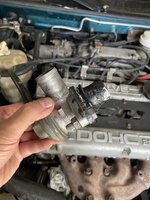
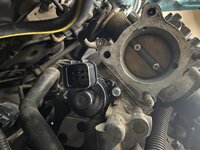
While I was in there, I also replaced the Idle Air Control (IAC) valve, which had been giving me some issues previously.


Coolant Reservoir Relocation​

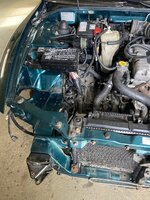
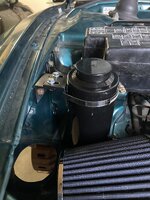
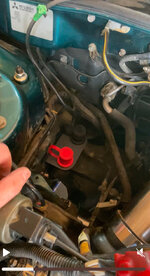
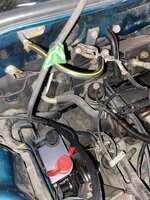
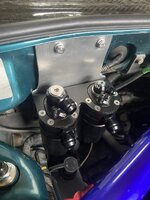
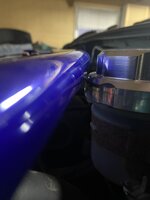
After installing the FMIC, I discovered that the OEM coolant reservoir no longer fit in its original spot. To solve that, I ordered a universal Evil Energy coolant reservoir and temporarily mounted it next to the intake. It’s not a permanent solution yet, but it’ll work until I fabricate a cleaner setup.


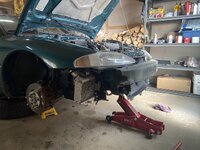
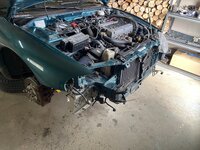
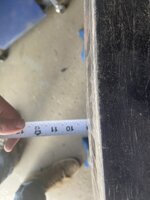
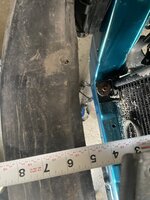
Pictures attached below show the full process — from the wiring disaster and splicing repairs to the FMIC fitment and final measurements.

2F4AC5E9-FE39-4812-B94D-FBCAB0265C9C.JPGIMG_4932.jpgIMG_4934.jpgIMG_4937.jpgIMG_4938.jpgIMG_4939.jpgIMG_4944.jpgIMG_4967.jpgIMG_4970.jpgIMG_4971.jpgIMG_4973.jpgIMG_4976.jpgIMG_4977.jpgIMG_4979.jpgIMG_4980.jpgIMG_4986.jpgIMG_4987.jpgIMG_4990.jpgIMG_4991.jpgIMG_4995.jpgIMG_4996.jpgIMG_5001.jpgIMG_5002.jpgIMG_5008.jpgIMG_5009.jpgIMG_5010.jpgIMG_5014.jpgIMG_5015.jpgIMG_5016.jpgIMG_5017.jpgIMG_5027.jpgIMG_5058.jpg
 
Last edited:

November 2025 Update – Carbon Fiber Hood & Hatch Tease​

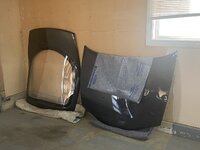
By November 2025, my carbon fiber hood and hatch had arrived—and were sitting patiently, still waiting for installation (and yes, they still are, haha).

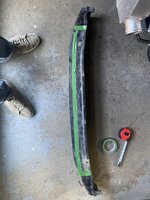
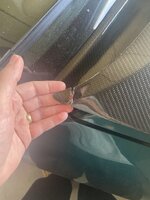
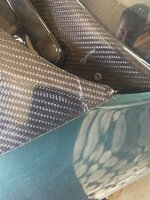
Unfortunately, when the hood arrived, I discovered some damage from shipping. Both front corners had cracked: one corner had completely broken off, while the other was still attached but split through. Not exactly the kind of “carbon” I was hoping to see!

Thankfully, the manufacturer stepped up and offered to repair the hood free of charge, even helping to arrange return transport to take care of the damage.

That didn’t stop me from mocking it up on the car just to see how it’ll look once installed for real—and let’s just say, it’s going to transform the whole appearance of the Talon. Really can’t wait to get it fitted properly once it comes back repaired.

IMG_5106.jpgIMG_5108.jpgIMG_5109.jpgIMG_5112.jpg
 
Last edited:

December 2025 Update – Winter Wrenching & Preventative Body Work​

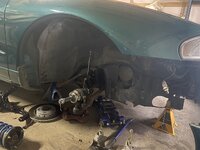
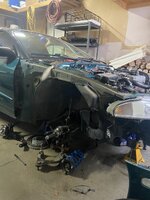
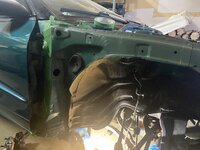
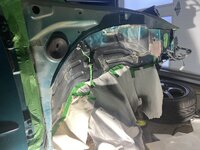
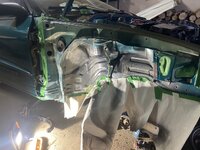
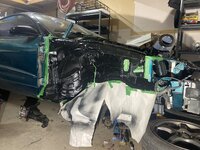
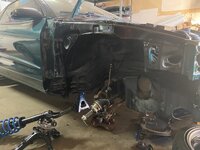
By December 2025, winter had fully set in here in Fort McMurray, AB, making it the perfect time to tackle some preventative body work — specifically undercoating the front wheel wells and suspension components.

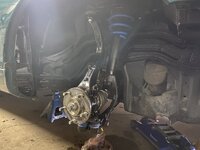
To get started, I completely stripped the front suspension and removed both front fenders. Judging by the condition of the factory body silicon, I’m fairly certain I’m the first person to ever remove them — the original OEM sealant still firmly bonded the fenders to the chassis and had to be carefully pried loose after unbolting.

Refreshing the Front Suspension​

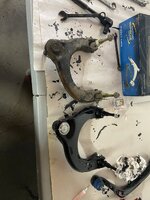
While inspecting the control arms and bushings, the age of the car showed clearly — after all, she’s 28 years old now, so I sourced a full set of fresh replacement components with greaseable ball joints:
  • Upper control arms
  • Lower straight arms
  • Lower toe arms
  • Tie rod ends
Before installation, I coated all of the new parts for extra corrosion resistance and long-term protection.

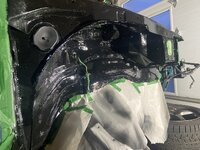
Undercoating Process​

For the wheel wells, I wanted to make sure everything was properly cleaned and sealed:
  1. Cleaned and wire‑wheeled all surfaces
  2. Sanded thoroughly
  3. Cleaned and degreased again
  4. Applied two coats of POR15
  5. Added one coat of rubberized undercoating
  6. Finished with a top coat of enamel chassis paint
Of course, all surface rust was removed ahead of time — the goal was to ensure I never have to worry about strut tower rust during my ownership.

After everything cured, I reassembled the front end and also undercoated the inside of each front fender before reinstalling them.

Now it’s just a waiting game until summer when I can take the car in for an alignment and get a proper feel for the refreshed suspension setup.

Eventually, I'll add a set of FEALS Coilovers to complete the suspension setup.


Up Next​

Next on the list: relocating the battery to the trunk to free up some much‑needed space in the engine bay. I’ll be using an Odyssey AGM28 battery for the setup — stay tuned for that update soon!

IMG_5143.jpgIMG_5144.jpgIMG_5145.jpgIMG_5146.jpgIMG_5149.jpgIMG_5150.jpgIMG_5151.jpgIMG_5152.jpgIMG_5153.jpgIMG_5160.jpgIMG_5177.jpgIMG_5180.jpg
 
Last edited:
February 2026 Update – Sound Deadening & Battery Relocation

With the front suspension refresh complete, I shifted focus to two comfort and functional upgrades: finishing the foundation of the interior sound deadening and relocating the battery to the trunk to tidy up the engine bay for future catch can installations.

Sound Deadening and Cabin Insulation

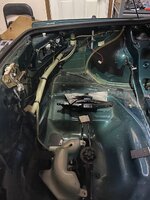
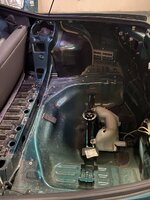
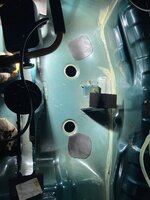
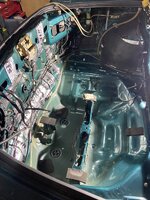
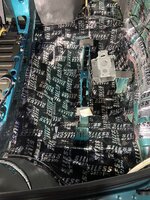
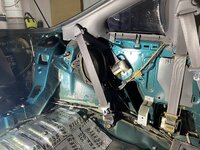
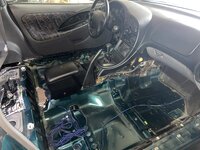
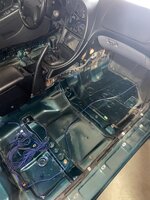
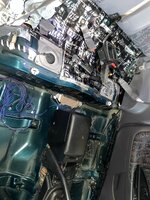
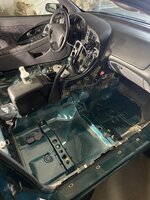
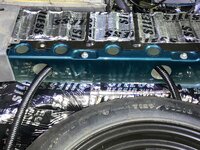
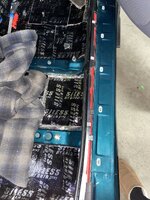
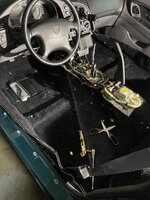
When stripping the interior, I was super pleased with the condition of the body — absolutely no rust anywhere, and only a fine layer of dust from years of use. A simple wipe‑down and light degreasing were all that was needed before starting.

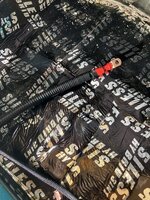
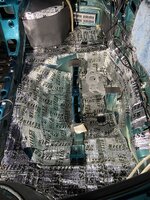
I used a combination of Siless materials for damping and acoustic control:
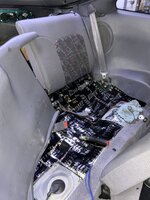
  • Siless Max 120 mil constrained-layer damping (CLD) topped with Siless Hybrid 3‑in‑1 (CLD/CCF/MLV) throughout the cabin floor, rear seat area, and trunk.
  • Siless 80 mil layered with 157 mil closed‑cell foam (CCF) along the rear quarter interior sides and trunk side walls for vibration and airborne noise isolation.
Every sheet was applied with full roller pressure and sealed in overlapping seams for maximum coverage. The result is an incredibly solid feel everywhere — panels sound muted when tapped, the rear quarters are acoustically dead, and the overall cabin isolation is dramatically improved. I’ll be finishing the doors and interior roof panels later this year to complete the sound-dampening package.

Battery Relocation to the Trunk

Once the interior was prepped, I moved on to relocating the battery to free up space in the engine bay.

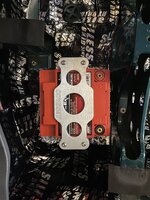
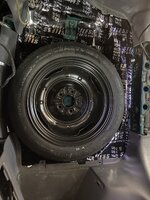
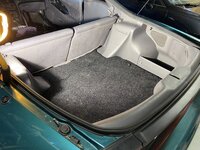
For this setup, I used an Odyssey AGM28 sealed battery, which doesn’t require a separate battery box. It’s held firmly in place with an Odyssey aluminum hold‑down bracket, bolted directly to the trunk floor beneath the spare‑tire well.

To make room, I deleted the factory washer‑fluid reservoir and installed a rear washer‑fluid reservoir from an Eclipse GS, repurposing it for the front sprayers. The front washer‑fluid hose and control harness now connect to this new reservoir’s pump. The rear washer‑fluid pump hose and harness were tapped and tucked out of sight.
Because the new reservoir doesn’t include a low‑level sensor, I jumpered the original low‑level switch harness to maintain a closed electrical loop which will prevent the dash warning light from triggering while driving.

For the electrical side I used:
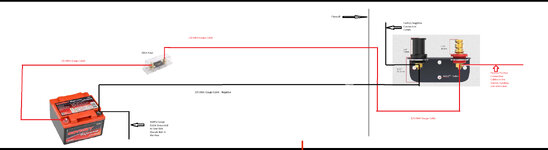
  • 1/0 AWG OFC cable for both positive and negative runs.
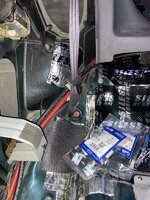
  • The positive cable connects to a 200 A inline fuse within 8 in of the battery, then travels along the passenger‑side cabin route, through the firewall to a remote battery terminal mounted on the lower chassis rail beneath the original battery location.
    • The factory positive and negative engine‑bay harnesses connect to this terminal’s posts.
  • A full‑length 1/0 AWG negative cable also runs from the trunk battery to the same remote terminal, plus a secondary 4‑AWG ground directly from the battery to a bolt in the trunk.
This layout keeps voltage potential balanced across the chassis, ensuring stable power delivery to the ECU, starter, and alternator, and provides an easy access boost/charge location in the engine bay tucket out of the way.

All cables are protected in wire loom, secured with electrical tape at every grommet, and neatly tucked — completely invisible once the interior is reinstalled.

Interior Refinishing and Electronics

With the wiring done, I ordered a new mass‑backed ACC replacement carpet for added insulation and luxury. Before reinstalling it, I’ll be installing the Boyo VTK601HD reverse‑camera wired to my Kenwood DMX908S head unit, finalizing the next stage of modernization for the cabin.


Up Next

Once the new carpet and head unit are in, I’ll finish the remaining sound‑deadening work on the doors and roof panels later in the year. From there, it’ll be time to move outside again and begin reassembly for the spring/summer season.

Additional system upgrades planned for 2026 include crankcase ventilation, monitoring instrumentation, fuel and cooling systems, and drivetrain updates.
  • Crankcase Ventilation:
    • A new powder coated valve cover will have dual 10AN fittings welded on to support a pair of sealed catch cans — one for boost‑pressure relief, the other for vacuum operation.
  • Monitoring Gauges:
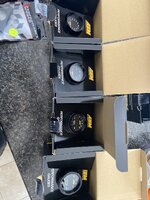
    • I’ll be adding AEM X‑Series gauges for Boost, Wideband O₂, Fuel Pressure, Oil Pressure, and Oil Temperature to keep tabs on the powertrain.
  • Fuel System:
    • The upgrade will feature a Walbro 450 lph pump, 8AN supply line to a Performance World 10‑micron filter, Radium Engineering fuel rail with direct‑mount damper, gauge, and FPR supporting a 6AN return. Two fuel‑pressure sensors will be installed — one driving a remote in‑cabin gauge, the other wired to the ECU for datalogging.
  • Cooling System:
    • A Mishimoto radiator paired with dual 12‑inch Spal puller fans, each powered through dedicated relays which will stabilize cooling while reducing fuse‑load risk.
  • Drivetrain:
    • A Stage 1.5 TRE AWD Manual Transmission is on order. Once it arrives, I’ll pair it with a South Bend SS‑X Series 2700 lb pressure plate, a TZ/B‑Series Kevlar‑Ceramic clutch disc, and a Streetlite flywheel — aiming for smooth, responsive engagement with long‑term durability.
Lots on the horizon for the next few months, and if all goes to plan, the Talon should be more refined, reliable, and mechanically sorted for the upcoming summer driving season.
IMG_5338.jpgIMG_5284.jpgIMG_5287.jpgIMG_5293.jpgIMG_5298.jpgIMG_5300.jpgIMG_5302.jpgIMG_5310.jpgIMG_5311.jpgIMG_5327.jpgIMG_5328.jpgIMG_5329.jpgIMG_5331.jpgIMG_5332.jpgIMG_5333.jpgIMG_5342.jpgIMG_5344.jpgIMG_5345.jpgIMG_5346.jpgIMG_5347.jpgIMG_5343.jpg
 
Last edited:
Late February 2026 Update – Interior, Stereo, and Reverse Camera

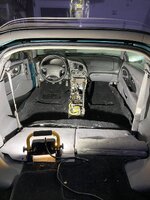
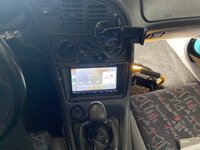
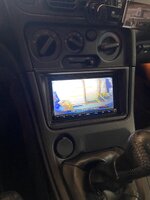
With the battery relocation wiring complete, it was time to finish off the interior by installing a new black ACC cut-pile carpet with added mass backing, as well as a modern stereo and reverse camera. For these upgrades, I went with a Kenwood DMX908S head unit paired with a Boyo VTK601HD reverse camera.

The previous owner had installed a Pioneer AVH-P3200BT, which was functional but starting to feel dated. I wanted something that offered Bluetooth, wireless and wired Apple CarPlay/Android Auto, hands-free calling, multiple camera inputs, and a 5V preamp for improved audio quality with a 13-band EQ tuner — basically a full modern infotainment setup.

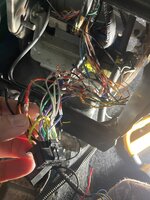
Installation wasn’t plug-and-play, as the stock stereo harness had been cut and spliced multiple times over the years. Even though I was confident about which wires were which, I still double-checked every connection with my voltmeter before hooking up the Kenwood head unit. The result? I’m not sure if it’s the head unit, the sound deadening, or a combination of both, but the audio quality is night-and-day compared to before — even with the stock speakers.

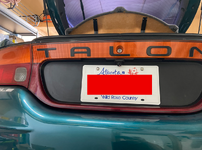
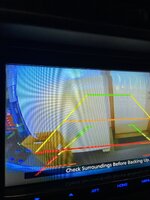
The reverse camera was straightforward. I wired it so it activates automatically when the car is in reverse by tapping the reverse light trigger wire in the trunk. Since I pre-ran the wiring through the cabin and under the car during the earlier interior tear-down for the battery relocation and sound deadening, connecting the Boyo camera to the head unit was easy. I mounted the camera just below the trunk latch using one of the supplied brackets, and it sits cleanly and discreetly.

With the interior fully back together, I’ve placed orders for all the fuel system, cooling system, and monitoring gauge upgrades. I’m still waiting on my TRE Stage 1.5 transmission and the new valve cover to support the dual catch cans, but with Spring and Summer fast approaching, there’s a lot of work left to get the Talon ready for the season.

On the bright side (or maybe not so bright…), it’s still -30 °C here, so at least I have a little extra time to plan and prep everything before getting back under the car.

New Cabin Carpet 2.jpgNew Cabin Carpet.jpgIMG_5401.jpgIMG_5403.jpgIMG_5402.jpgNew Trunk Carpet After Battery Relocation.jpgReverse Cam Location.pngIMG_5407.jpgIMG_5408.jpg
 
Looks good. How do you like the fit and finish of the carpet?
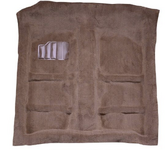
The finish is great. Fitment took a lot of work. The carpets come oversized with extra material like the image below. To install, you have to trim the center console material. I let the carpet rest outside of the box for 24hrs and then used my factory carpet as a template to cut the rough shape needed for it to fit inside the car, then finished the remaining trimming for it to have a proper fit. I also transferred the plastic clips that held the edges of my factory carpet to the sides under the door sills, using 1/8" rivets. This ensured the carpet didn't pull loose under the door sills.

If you choose to replace your carpet with an ACC one, I would go with the cut pile carpet, not the Essex one, otherwise it may be too thick. The cut pile with mass backing is plenty thick and much heavier than the factory carpet which will also help with the noise dampening I wanted.
ACC Carpet.png
 
March 2026 Update – Parts Arrival, Interior Refinement & Exhaust Progress

This past month has been a slower one, mostly spent waiting on parts to arrive—but that didn’t stop me from making a bit of progress where I could.

Interior Refinement – LED Conversion
While the car was sitting, I took some time to refine the interior lighting by converting everything over to 6000K LED bulbs. It’s a small change, but it really modernizes the cabin and improves overall visibility at night.

Here’s the full breakdown:
• Glovebox & footwells – 6000K 194 LED bulbs
• Vanity mirrors – 6000K 29mm LED bulbs
• Dome lights – 6000K 31mm festoon LED bulbs
• Hatch/cargo light – 6000K 28mm festoon LED bulb

The difference is immediately noticeable—much cleaner light output compared to the factory incandescent bulbs, and it complements the rest of the interior upgrades nicely.

Parts Orders – Lining Up the Next Phase
Back in late February, I placed a couple of large orders to support the next stage of the build. The goal here is to continue building out the supporting systems so the car is ready for more power and improved reliability.

Fuel System:
• Walbro 450lph E85-compatible fuel pump
• 30A fuel pump rewire relay harness
• Radium Engineering fuel rail
• Radium Engineering direct-mount fuel pulse damper
• Radium Engineering direct-mount mechanical fuel pressure gauge
• Radium Engineering direct-mount fuel pressure regulator
• Performance World 8AN ORB 10-micron inline fuel filter
• Fuel filter bracket
• 8AN male to M14x1.5 bubble flare fitting
• 10 ft of 8AN PTFE line (supply) with fittings
• 10 ft of 6AN PTFE line (return) with fittings
• All remaining AN fittings for a complete setup

Cooling System:
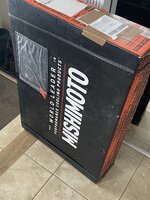
• Mishimoto dual-core radiator
• Performance World 7712B slim puller fans (x2, 1450 CFM each)
• 30A relay harness for radiator fans
• Blue Samco silicone radiator hoses (upper & lower)
• New radiator hose clamps

Exhaust:
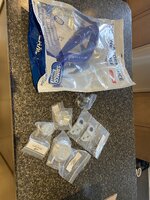
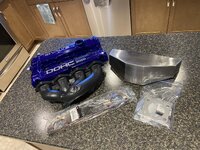
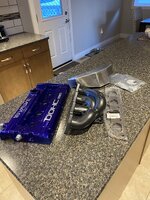
• FP Race manifold (ceramic coated & ported)
• OEM Mitsubishi exhaust manifold gasket
• OEM Mitsubishi turbo housing gasket
• Evo 8 exhaust manifold hardware kit
• ExtremePSI heat shield for FP manifold

Gauges:
• AEM X-Series UEGO wideband
• AEM X-Series boost gauge
• AEM X-Series oil pressure gauge
• AEM X-Series oil temperature gauge
• AEM X-Series remote fuel pressure gauge

Drivetrain:
• TRE Stage 1.5 AWD 5-speed transmission (used)

Other:
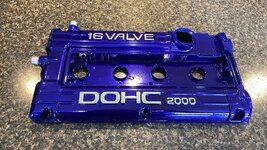
• Custom valve cover from Rix Racing, powder coated in Prismatic Powders Intense Blue (PPB-4474) with dual 10AN bungs for catch cans
• Dual Radium Engineering catch cans with 10AN lines/fittings
• Boosted Fabrications 2G front strut bar (OEM intake fitment), powder coated to match the valve cover
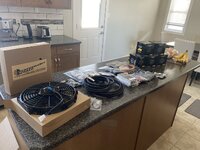
• Triple gauge AC vent pod from OS Gauge Pods (custom)
• Carbon fiber 2G DSM gas tank / trunk release trim piece
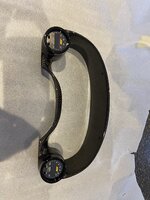
• Carbon fiber Gauge Cluster Speed Ring with Dual Gauge Pods

Dress-Up:
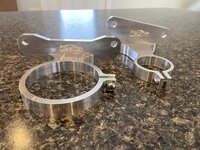
• JMF radiator brackets – bare aluminum
• JMF clutch fluid reservoir cap – bare aluminum
• JMF brake fluid reservoir cap – bare aluminum
• JMF engine oil cap - bare aluminum
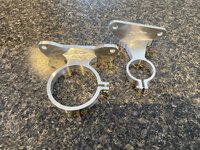
• DCP clutch reservoir bracket – bare aluminum
• DCP brake reservoir bracket – bare aluminum

Exhaust Work – FP Race Manifold Install
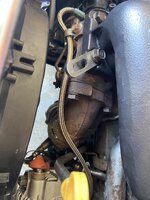
Once parts started arriving, I was able to get some time in the garage to install the FP Race manifold along with the ExtremePSI heat shield and I was definitely happy to get rid of the factory 2G manifold — especially the excessive RTV that had been used on the gasket previously. Everything cleaned up well, and the new manifold fitment was straightforward.

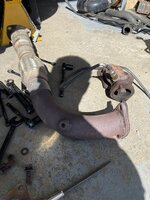
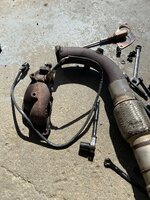
However, while everything was apart, I came across an issue that explains a lot. After pulling things apart, I found that my TD05H 14B turbine housing is cracked and the crack appears to run through the wastegate flapper area allowing exhaust gases to bypass the turbine wheel. This is a common failure point on these turbos, but it effectively reduces the energy driving the turbo, which explains the laggy spool characteristics I’ve been noticing. Not ideal, but also not the end of the world since a turbo upgrade is already part of the long-term plan.

For the manifold install, I opted to use Evo 8 exhaust manifold hardware instead of the factory 2G hardware. The Evo hardware uses nuts with small serrations/teeth that improve grip and help resist loosening over time after heat cycles. It’s a small upgrade, but one that should improve long-term reliability.
____________________________________________________________________________________________________________________________________________________________________________________________________________________________________________________________________________________________________________________________________________________________________
Up Next
Next on the list is installing the Mishimoto radiator along with the dual slim fans that I'll be wiring through a dedicated 30A relay harness to keep electrical load off the factory circuits and avoid blowing fuses.

With all the major supporting mods now on hand, things should start moving a lot quicker heading into the next update.

Stay tuned for more.

IMG_5466.jpgIMG_5467.jpgIMG_5486.jpgIMG_5490.jpgIMG_5505.jpgIMG_5506.jpga5cffe77da64d10b1990f4b505ffef44.JPEGIMG_5507.jpgIMG_5483.jpgIMG_5508.jpgIMG_5481.JPGIMG_5127.PNGIMG_5512.jpgIMG_5513.jpgIMG_5514.jpgIMG_5516.jpgIMG_5517.jpgIMG_5518.jpg
 
March 2026 Update – Parts Arrival, Interior Refinement & Exhaust Progress

This past month has been a slower one, mostly spent waiting on parts to arrive—but that didn’t stop me from making a bit of progress where I could.

Interior Refinement – LED Conversion
While the car was sitting, I took some time to refine the interior lighting by converting everything over to 6000K LED bulbs. It’s a small change, but it really modernizes the cabin and improves overall visibility at night.

Here’s the full breakdown:
• Glovebox & footwells – 6000K 194 LED bulbs
• Vanity mirrors – 6000K 29mm LED bulbs
• Dome lights – 6000K 31mm festoon LED bulbs
• Hatch/cargo light – 6000K 28mm festoon LED bulb

The difference is immediately noticeable—much cleaner light output compared to the factory incandescent bulbs, and it complements the rest of the interior upgrades nicely.

Parts Orders – Lining Up the Next Phase
Back in late February, I placed a couple of large orders to support the next stage of the build. The goal here is to continue building out the supporting systems so the car is ready for more power and improved reliability.

Fuel System:
• Walbro 450lph E85-compatible fuel pump
• 30A fuel pump rewire relay harness
• Radium Engineering fuel rail
• Radium Engineering direct-mount fuel pulse damper
• Radium Engineering direct-mount mechanical fuel pressure gauge
• Radium Engineering direct-mount fuel pressure regulator
• Performance World 8AN ORB 10-micron inline fuel filter
• Fuel filter bracket
• 8AN male to M14x1.5 bubble flare fitting
• 10 ft of 8AN PTFE line (supply) with fittings
• 10 ft of 6AN PTFE line (return) with fittings
• All remaining AN fittings for a complete setup

Cooling System:
• Mishimoto dual-core radiator
• Performance World 7712B slim puller fans (x2, 1450 CFM each)
• 30A relay harness for radiator fans
• Blue Samco silicone radiator hoses (upper & lower)
• New radiator hose clamps

Exhaust:
• FP Race manifold (ceramic coated & ported)
• OEM Mitsubishi exhaust manifold gasket
• OEM Mitsubishi turbo housing gasket
• Evo 8 exhaust manifold hardware kit
• ExtremePSI heat shield for FP manifold

Gauges:
• AEM X-Series UEGO wideband
• AEM X-Series boost gauge
• AEM X-Series oil pressure gauge
• AEM X-Series oil temperature gauge
• AEM X-Series remote fuel pressure gauge

Drivetrain:
• TRE Stage 1.5 AWD 5-speed transmission (used)

Other:
• Custom valve cover from Rix Racing, powder coated in Prismatic Powders Intense Blue (PPB-4474) with dual 10AN bungs for catch cans
• Dual Radium Engineering catch cans with 10AN lines/fittings
• Boosted Fabrications 2G front strut bar (OEM intake fitment), powder coated to match the valve cover
• Triple gauge AC vent pod from OS Gauge Pods (custom)
• Carbon fiber 2G DSM gas tank / trunk release trim piece
• Carbon fiber Gauge Cluster Speed Ring with Dual Gauge Pods

Dress-Up:
• JMF radiator brackets – bare aluminum
• JMF clutch fluid reservoir cap – bare aluminum
• JMF brake fluid reservoir cap – bare aluminum
• JMF engine oil cap - bare aluminum
• DCP clutch reservoir bracket – bare aluminum
• DCP brake reservoir bracket – bare aluminum

Exhaust Work – FP Race Manifold Install
Once parts started arriving, I was able to get some time in the garage to install the FP Race manifold along with the ExtremePSI heat shield and I was definitely happy to get rid of the factory 2G manifold — especially the excessive RTV that had been used on the gasket previously. Everything cleaned up well, and the new manifold fitment was straightforward.

However, while everything was apart, I came across an issue that explains a lot. After pulling things apart, I found that my TD05H 14B turbine housing is cracked and the crack appears to run through the wastegate flapper area allowing exhaust gases to bypass the turbine wheel. This is a common failure point on these turbos, but it effectively reduces the energy driving the turbo, which explains the laggy spool characteristics I’ve been noticing. Not ideal, but also not the end of the world since a turbo upgrade is already part of the long-term plan.

For the manifold install, I opted to use Evo 8 exhaust manifold hardware instead of the factory 2G hardware. The Evo hardware uses nuts with small serrations/teeth that improve grip and help resist loosening over time after heat cycles. It’s a small upgrade, but one that should improve long-term reliability.
____________________________________________________________________________________________________________________________________________________________________________________________________________________________________________________________________________________________________________________________________________________________________
Up Next
Next on the list is installing the Mishimoto radiator along with the dual slim fans that I'll be wiring through a dedicated 30A relay harness to keep electrical load off the factory circuits and avoid blowing fuses.

With all the major supporting mods now on hand, things should start moving a lot quicker heading into the next update.

Stay tuned for more.

View attachment 787479View attachment 787480View attachment 787483View attachment 787484View attachment 787485View attachment 787486View attachment 787478View attachment 787487View attachment 787482View attachment 787488View attachment 787481View attachment 787489View attachment 787490View attachment 787491View attachment 787492View attachment 787493View attachment 787494View attachment 787495
That's a pretty extensive parts list. Nice update.
 
That's a pretty extensive parts list. Nice update.
Thanks, Chris.

Next round of parts on order will be coming from Tim at TMZ.

- SS-Series 2200# Pressure Plate with TZ/B-Series Kevlar/Ceramic Clutch
- OEM TOB and Clip
- OEM Clutch Fork
- OEM Clutch Slave Cylinder
- OEM Flywheel and Pressure Plate Bolts

I’m going to be installing all new clutch components when I swap transmissions.

Plan is to send my 2GB transmission for rebuild after I install the TRE Stage 1.5 2GA transmission, with a matching T-case of course. Hoping to install a front LSD and 4-spider gears if I can still find them. I’d like my 2GB transmission to be the lifetime trans for this car once my build is complete.

Lots more still to come.
 
Looking forward to seeing more progress on your build. I need to start a build thread on my 98 TSi as well. Very cool man.
 
That's a great clutch, one minor change I'd do is do the full ceramic b-series disk. Mine held 430awhp and like 490awtq with no issues. You could slip it like the OEM clutch, and never have to worry about it "glazing" and having to re-bed the material.
 
That's a great clutch, one minor change I'd do is do the full ceramic b-series disk. Mine held 430awhp and like 490awtq with no issues. You could slip it like the OEM clutch, and never have to worry about it "glazing" and having to re-bed the material.
Missed this recommendation, but ordered my clutch on Wednesday and just received it on Friday. Express shipping from TMZ in the US to my place in Canada was super quick. Now just waiting on my transmission to arrive before I begin the swap.
 
April 2026 Update – Catch Can System, Cooling Upgrades & Spring Prep

With the battery relocation complete and the factory battery finally out of the engine bay, I was able to move into the next phase of the build and free up some much-needed working room under the hood.

Dual Catch Can / Custom Valve Cover Installation

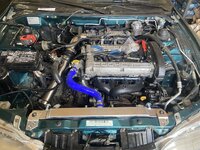
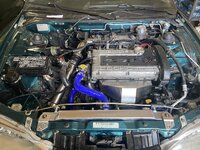
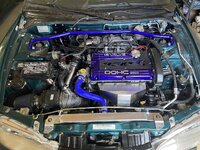
First on the list was installing my valve cover from Rix Racing that has dual welded 10AN bungs for the PCV system and was powder coated in Prismatic Powders Intense Blue with a new Felpro valve cover gasket kit.

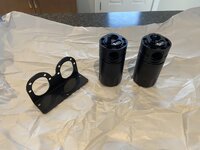
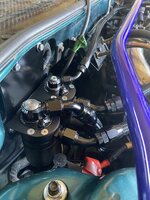
With the valve cover in place, I got to work installing the catch can setup using two Radium Engineering universal catch cans, each side receiving its own dedicated 10AN feed line directly from the valve cover:
  • Boost / vent side: routed to a catch can with a 10AN banjo outlet, then connected to the turbo intake pipe
  • Vacuum side: routed to a second catch can using a 6AN banjo fitting with integrated PCV valve, then connected to the intake manifold
I chose to reduce the vacuum-side return line to 6AN, since it doesn’t require the same flow capacity as the pressurized side, which remains 10AN. This was my first time building AN lines from scratch, so there was definitely a learning curve but they turned out great, and I’m really happy with how clean the finished system looks.

Front Strut Bar Installed

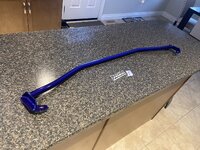
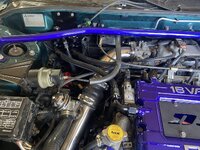
Next up was the installation of a Boosted Fabrication front strut bar, also powder coated in the same Intense Blue as the valve cover for a matching look.

Fitment was excellent overall but it barely cleared the brake master reservoir cap, so I’m hoping it still fits once I install the new CNC aluminum reservoir brackets from DCP otherwise I'll have to modify the DCP brackets a little. And aside from aesthetics, this should add some welcome front-end rigidity and improve handling.

Cooling System Overhaul

From there, I moved on to the cooling system.

Installed components:
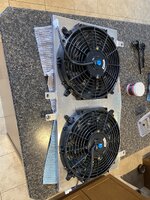
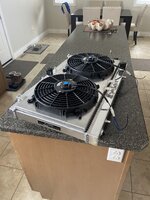
  • Mishimoto dual-core radiator
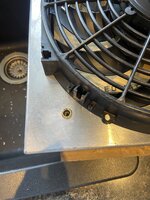
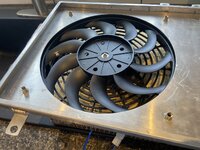
  • Mishimoto aluminum radiator shroud with nutserts installed for easy install and removal of the fans later
  • Blue Samco Radiator Hoses (upper/lower)
  • Dual Performance World 7712B slim puller fans
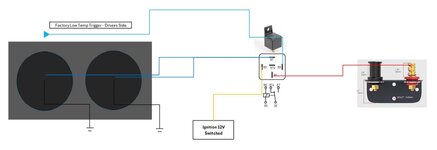
  • Standalone 50A relay harness
Rather than rely on the factory fan wiring, I chose to run the fans through their own dedicated relay circuit to ensure full battery voltage, cleaner power delivery, and a properly fused high-current path.

My stand alone relay wiring layout was as follows:
  • Pin 30: 12V battery power from fuse box
  • Pin 87:positive leads to both fans
    • Fan negative leads were tied together and chassis grounded.
  • Pin 85: chassis ground
  • Pin 86: trigger from the positive side of the factory condenser/radiator fan relay circuit
Knowing I could have simply re-pinned the factory 4-wire fan connector, I wanted a dedicated solution that would reduced load on the factory circuits and provide more stable power to the fans even though I know many others have done just fine without an additional relay.

Exhaust Heat Wrap

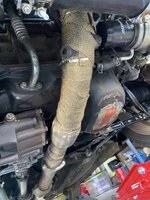
Lastly, I removed the O2 housing and downpipe so I could wrap sections of the exhaust in titanium heat wrap to reduce engine bay temperatures, improve thermal efficiency, and help keep radiant heat away from the new slim fans and surrounding components.

Up Next

Still left on the pre-season to-do list:
  • Install AEM gauges
  • Reinstall front bumper
  • Final check-over before first drive of the year
Here in Fort McMurray, we’re still dealing with 2–3 feet of snow, and once that melts the roads usually turn into a muddy mess before they finally dry out. So while driving season hasn’t officially started yet, it’s getting closer and I’m definitely looking forward to getting the Talon back out on the road.

Stay tuned for more.

IMG_5521.jpgIMG_5522.jpgIMG_5523.jpgIMG_5530.jpgIMG_5536.jpgIMG_5537.jpgIMG_5538.jpgIMG_5654.jpgIMG_5655.jpgAluminum Bracket.jpgIMG_5648.jpgAN Lines.jpgCatch Cans.jpgAdapter.jpgEngine Bay.jpgManifold.jpgIMG_5650.jpgIMG_5726.jpgIMG_5727.jpgIMG_5729.jpgIMG_5730.jpgIMG_5652.jpgIMG_5653.jpg
 
Lookin' good Aaron. Sorry to hear about the snow you're dealing with, seems weather is bad in a lot of places still.
Thank you. It's nearly gone now. Should be able to take the car for a short drive next set of days off.

I also have some new garage cabinets coming, so need to move the car out of reorganize before I start to tackle more items for this project.
 
Add Value - Be Respectful - No Trolling - No Misinformation - Participate Often!
Support Vendors who Support the DSM Community

Latest Classifieds

  • For sale 1g 90 Oil Cooler
    90 OEM oil cooler with custom lines. Takes 18x1.50 mm fittings at the housing. Fits in a...
    • Galant665
    • Updated:
  • Wanted 2g 2G FWD Fuel Filler Rubber Hose
    Decent condition FWD fuel filler hose.
    • kyler021
    • Updated:
    • Expires
  • For sale 4G63 (Broken) Cusco MZ Center LSD
    Selling a broken Cusco MZ center LSD (not a Tarmac) for DSM/Evo123. This unit failed a magnaflux...
    • Canadian_CD9A
    • Updated:
    • Expires
  • For sale 1996 Eagle Talon Tsi AWD - RaceCar Shell
    Rolling Shell
    • Black_Cat_DSM
    • Updated:
    • Expires
  • For sale Neat gearbox 4 spider conversion
    I picked up two spare sets of spider gears for a 4 spider conversion as I wasn't sure what the...
    • tstkl
    • Updated:
    • Expires
Back
Top